A wedding turban can be one of the most distinctive accessories in a groom’s outfit. Across South Asian wedding traditions, turbans are worn in different colors, fabrics, and wrapping styles to complement traditional clothing and personal preferences. From elegant ivory turbans to richly colored Punjabi pagris, each style can add character to a groom’s wedding appearance.
If you are searching for Traditional Wedding Turban Styles, this guide explores 25 ideas suitable for Pakistani, Indian, Punjabi, and other South Asian wedding looks. Whether you prefer a simple Nikkah outfit or a grand Barat sherwani, these styles can help you find inspiration for your special day.
- Classic Ivory Wedding Turban

An ivory wedding turban is a timeless choice for grooms who prefer a refined and elegant appearance. Its soft neutral shade pairs beautifully with white, cream, beige, and gold sherwanis.
This style works well for Nikkah ceremonies, traditional wedding portraits, and formal celebrations. A neatly wrapped ivory turban with minimal decoration keeps the overall look sophisticated without overpowering the outfit.
- Royal Gold Wedding Turban
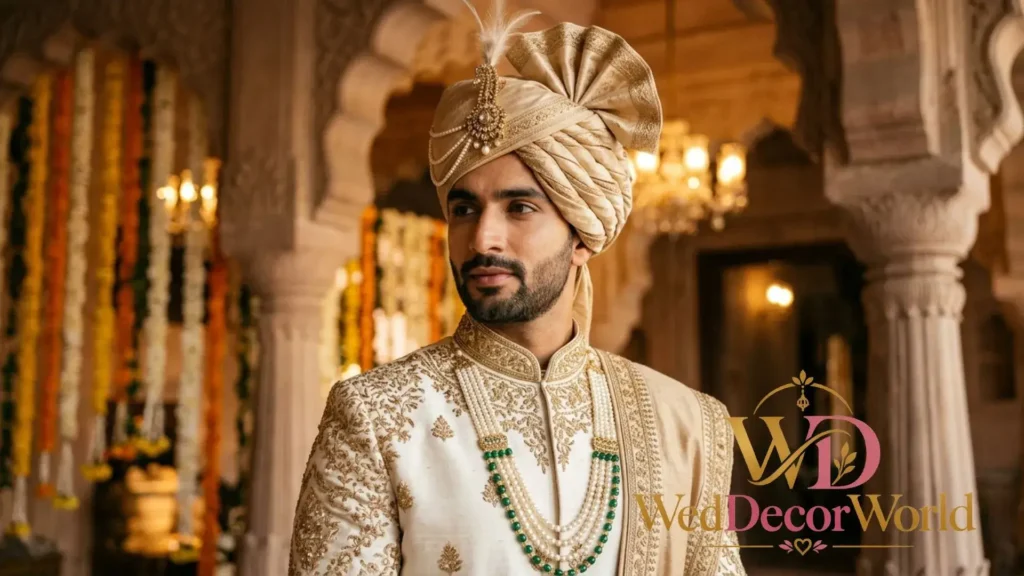
A gold wedding turban adds a regal touch to traditional groom attire. It complements champagne, cream, ivory, and beige sherwanis, especially when the outfit features gold embroidery. Groom Watch and Accessories Ideas
Choose a fabric with a subtle sheen rather than excessive decoration if you want a balanced appearance. Gold-toned details can also be coordinated with the groom’s shawl, buttons, or traditional footwear.
- Traditional Punjabi Pagri
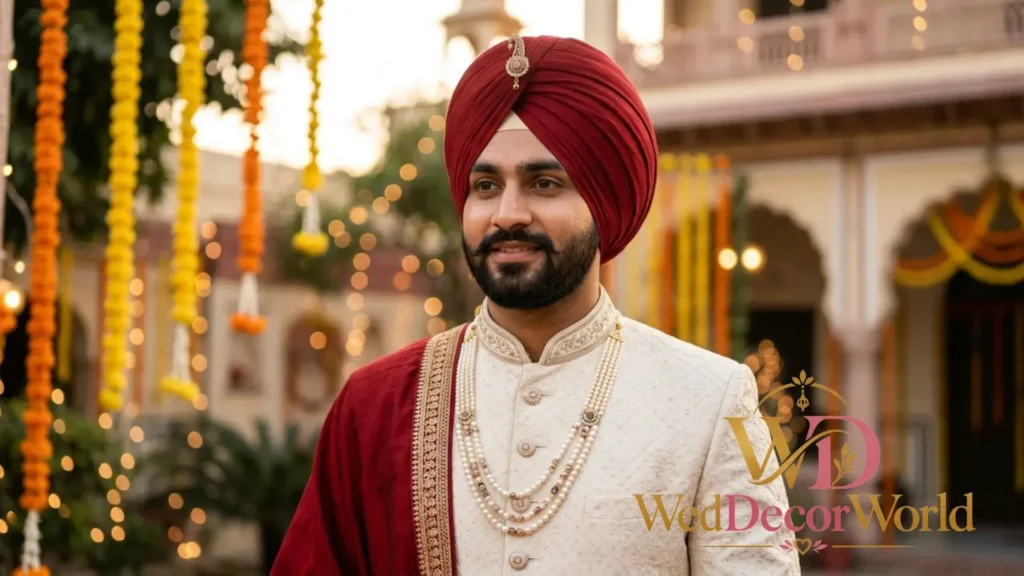
The Punjabi pagri is a recognizable traditional headwear style associated with Punjabi cultural dress. It can be styled in different colors and wrapping patterns depending on regional customs and personal preference.
For a wedding, a pagri in cream, maroon, mustard, or a shade matching the groom’s outfit can create a coordinated appearance. Consider the family’s traditions when selecting the specific wrapping style.
- Maroon Wedding Turban
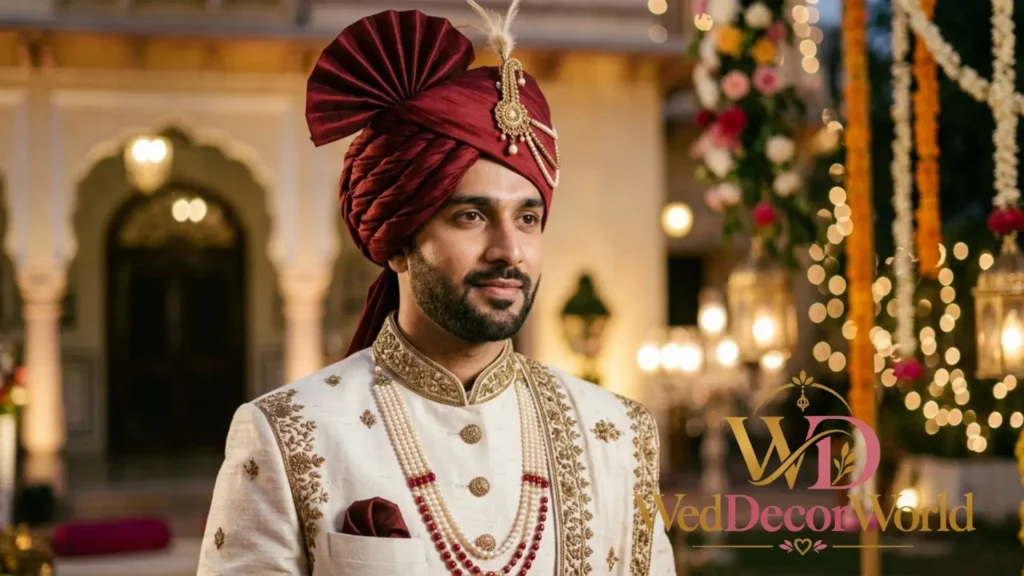
A maroon turban creates a rich and striking look for a groom. It pairs particularly well with ivory, cream, beige, and gold sherwanis, providing a bold contrast without requiring too many additional accessories.
This color is especially suitable for evening wedding celebrations and formal portraits. A plain maroon fabric offers a classic appearance, while subtle gold detailing can make it more festive.
- White Nikkah Turban
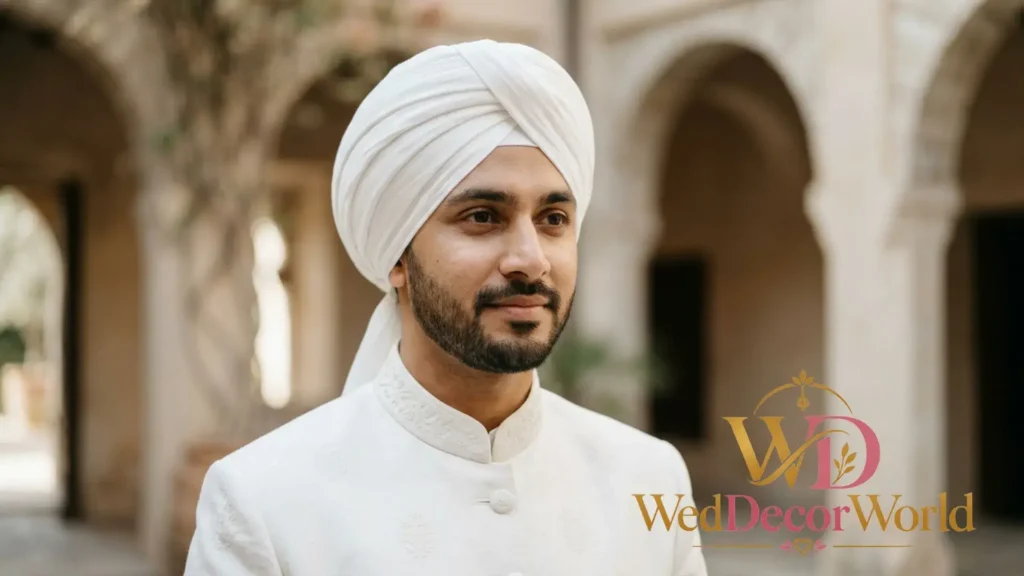
A white turban is an elegant option for grooms who prefer a clean, understated wedding outfit. It complements white kurta pajama, ivory sherwanis, and light-colored traditional suits.
For a coordinated Nikkah look, keep the wrapping neat and the accessories minimal. White fabric can also work well in bright outdoor photography because it creates a fresh, timeless appearance.
- Pink Wedding Turban
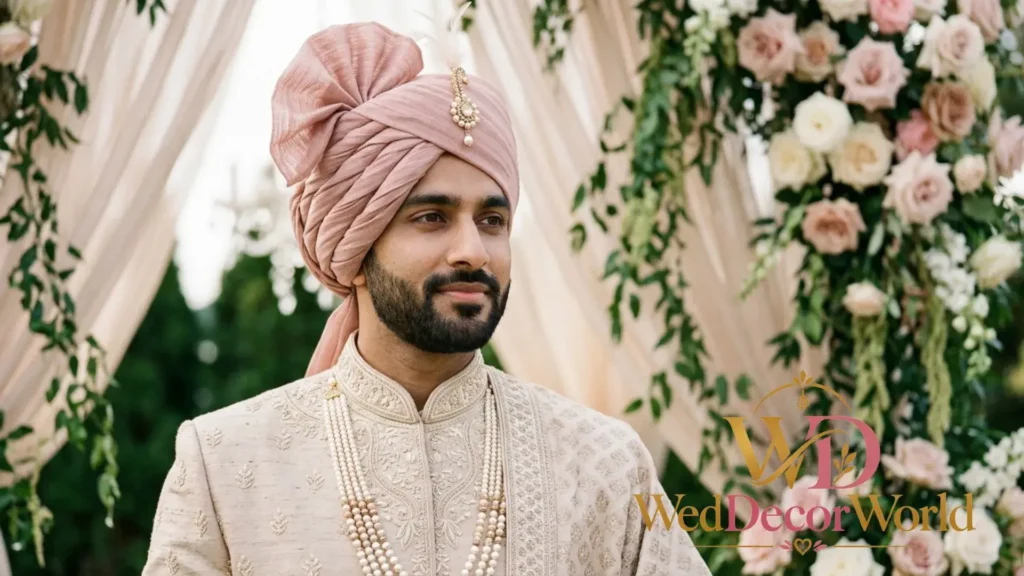
A soft pink turban can bring a romantic touch to a groom’s wedding attire. Shades such as blush, dusty rose, and muted pink complement cream, ivory, beige, and light grey outfits.
This style is suitable for daytime weddings, garden ceremonies, and celebrations with pastel decorations. Choose a shade that works with the outfit rather than matching every decorative element exactly.
- Navy Blue Wedding Turban

A navy blue turban is a stylish option for grooms who want a deeper color without choosing black or maroon. It works well with ivory sherwanis, silver embroidery, white outfits, and certain beige combinations.
A smooth, neatly wrapped navy turban creates a polished look for formal ceremonies. It can also complement navy details in a groom’s shawl or waistcoat.
- Emerald Green Wedding Turban
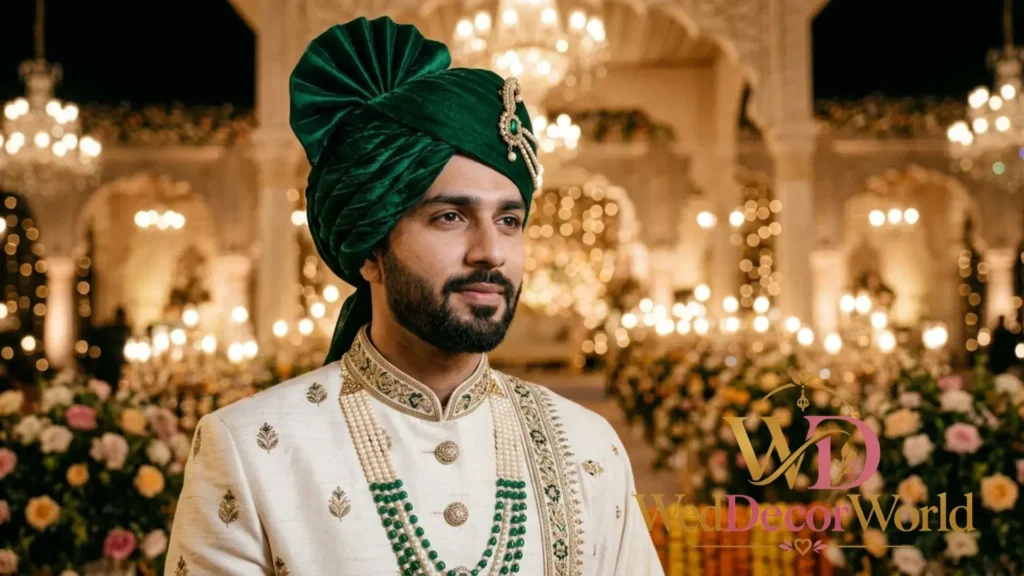
An emerald green turban adds a rich, traditional color to wedding attire. It pairs attractively with ivory, gold, cream, and some beige outfits.
For a coordinated appearance, consider a sherwani with subtle green accents or a matching stole. A deep green turban can suit formal celebrations while still allowing the groom’s outfit to remain the main focus.
- Black Wedding Turban
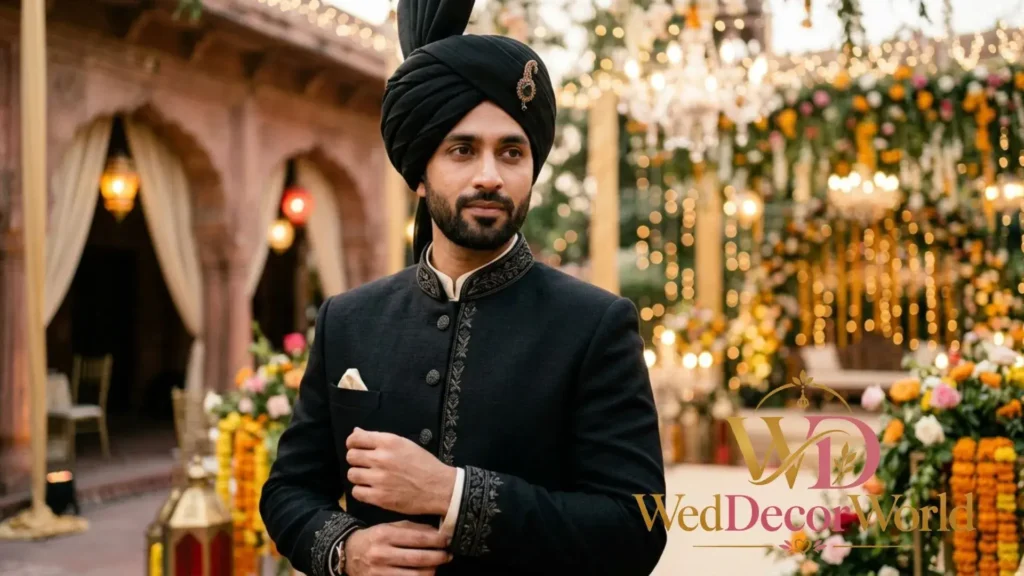
A black wedding turban offers a bold and contemporary interpretation of traditional groom styling. It can complement black, charcoal, ivory, and monochrome outfits.
This style is particularly suitable for grooms who prefer a dramatic appearance. Keep the fabric neat and the additional accessories understated so that the overall look remains balanced.
- Beige Wedding Turban

A beige turban is a versatile choice for a soft, coordinated wedding outfit. It works well with cream sherwanis, tan prince coats, ivory kurta pajama, and champagne-colored clothing.
Beige is especially useful when a groom wants a traditional look that feels understated rather than highly contrasting. A slightly textured fabric can add visual interest without requiring heavy decoration.
- Turban with a Decorative Brooch

A decorative brooch can add a refined finishing detail to a traditional wedding turban. Small gold-toned, pearl-style, or crystal-inspired designs can complement the fabric and the groom’s outfit.
Place the brooch securely and choose a size that suits the turban. If the sherwani already has elaborate embroidery, a smaller brooch can help keep the look elegant.
- Turban with a Kalgi

A kalgi is a traditional ornamental accessory that may be worn on a groom’s turban in certain South Asian wedding traditions. It can feature decorative feathers, metalwork, or jeweled details.
This style is often associated with formal, regal wedding attire. Select an ornament that complements the turban’s color and the outfit’s level of decoration, and consider family customs when deciding whether to include it.
- Gold-Embroidered Wedding Turban

A gold-embroidered turban can create a luxurious appearance when paired with traditional wedding clothing. Fine embroidery along the fabric or border adds texture and visual detail.
This option works particularly well with ivory, champagne, cream, and deep maroon sherwanis. For the most harmonious look, coordinate the embroidery with the outfit rather than using several competing patterns.
- Printed Wedding Turban

A printed turban offers an alternative to plain or embroidered fabric. Subtle floral, paisley, or traditional geometric patterns can add personality to a groom’s outfit.
Printed fabrics work well when their colors complement the sherwani or waistcoat. To keep the outfit balanced, consider pairing a patterned turban with relatively simple clothing.
- Pastel Wedding Turban
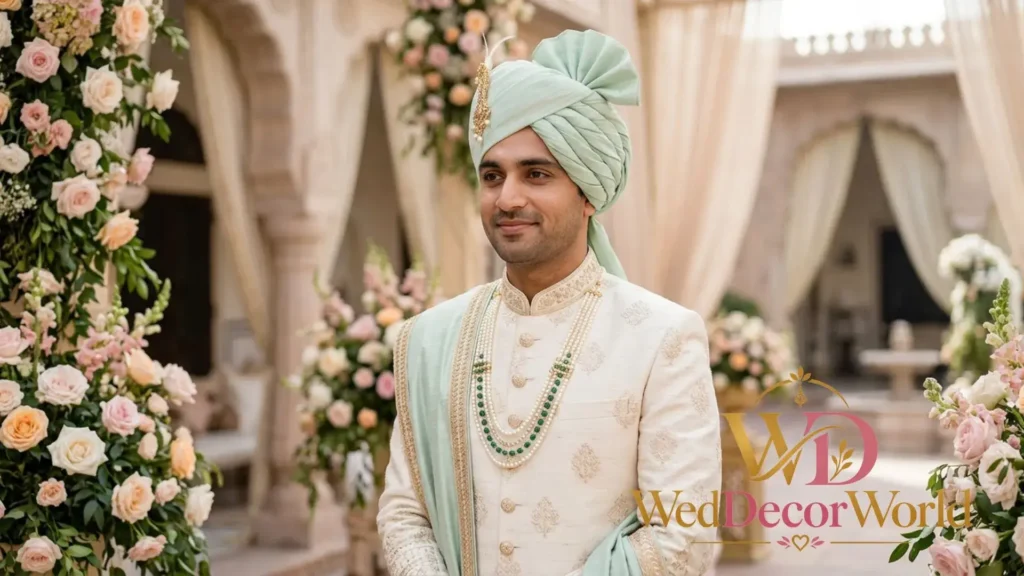
Pastel turbans in mint green, powder blue, lavender, or blush pink can create a soft, contemporary wedding look. These colors are especially suitable for daytime functions and celebrations with light-colored décor.
A pastel turban pairs well with ivory, cream, and beige outfits. Choose a shade that complements the groom’s clothing and photographs naturally in the planned lighting.
- Rajasthani Wedding Safa

The Rajasthani safa is a traditional form of Indian headwear associated with regional dress and ceremonial occasions. It is often recognized by its distinctive wrapping and colorful fabric.
For wedding styling, colors such as saffron, red, pink, or cream may be considered depending on regional customs. Because safa styles vary, a local specialist can help select an appropriate wrap for the occasion.
- Punjabi Turban with a Contrasting Border

A Punjabi-style wedding turban with a contrasting border adds a subtle decorative feature to traditional attire. For example, an ivory turban with a gold border or a maroon turban with a lighter edge can create a coordinated finish.
This style is suitable for grooms who appreciate traditional wrapping but want a little additional detail. Keep the border proportionate to the fabric and the overall outfit.
- Velvet Wedding Turban

A velvet turban can introduce rich texture to a groom’s formal wedding look. Deep maroon, emerald green, navy, and black are options to consider for evening celebrations.
Velvet can look particularly striking with embroidered sherwanis and heavier winter wedding fabrics. Since it has a naturally rich appearance, minimal additional decoration often works best.
- Silk Wedding Turban

A silk turban offers a smooth finish and a subtle sheen. It can complement formal sherwanis, prince coats, and traditional outfits in ivory, gold, maroon, or navy.
Silk-inspired fabrics are suitable for grooms who prefer a polished and refined appearance. Ensure the material is wrapped securely so it maintains its shape throughout the ceremony.
- Two-Tone Wedding Turban

A two-tone turban combines two complementary shades to create a distinctive look. Examples include ivory and gold, maroon and beige, or navy and silver.
This style can help connect different colors in a groom’s outfit. For a balanced result, use one main color and a second shade as a supporting accent.
- Minimalist Modern Wedding Turban
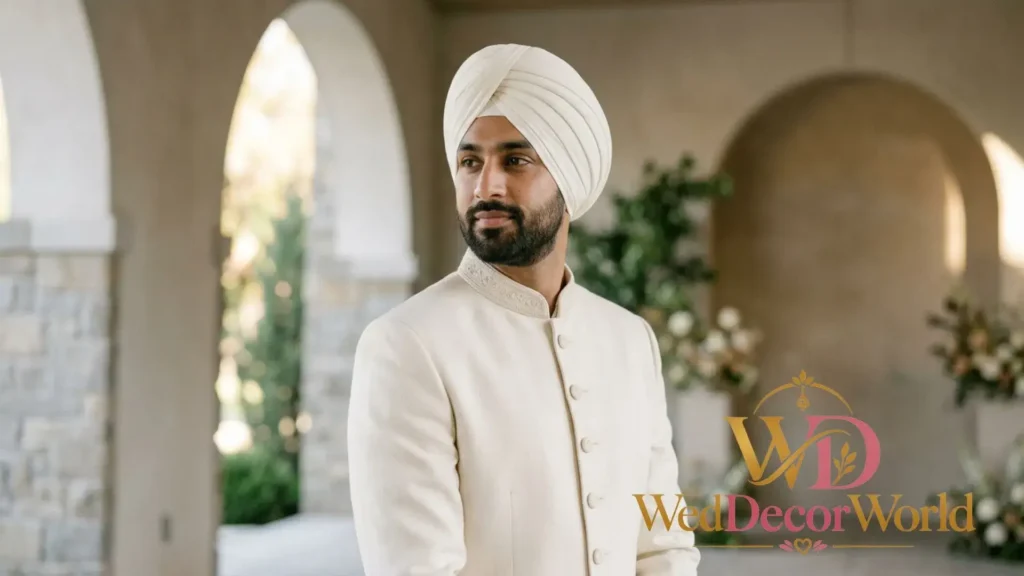
A minimalist turban focuses on clean wrapping, smooth fabric, and little or no ornamentation. Ivory, white, beige, and muted grey are useful choices for contemporary wedding styling.
This look works particularly well with modern sherwanis and tailored traditional suits. It is an excellent option for grooms who want their clothing and overall appearance to feel elegant without elaborate decoration.
- Traditional Turban with a Matching Shawl

Coordinating a groom’s turban with a shawl creates a connected and polished appearance. The two accessories can share the same color or use complementary shades and embroidery.
An ivory turban with a champagne shawl is one option, while a maroon turban can work with an ivory shawl featuring maroon details. Avoid making both pieces overly elaborate if the sherwani already has heavy embroidery.
- Wedding Turban with a Sherwani
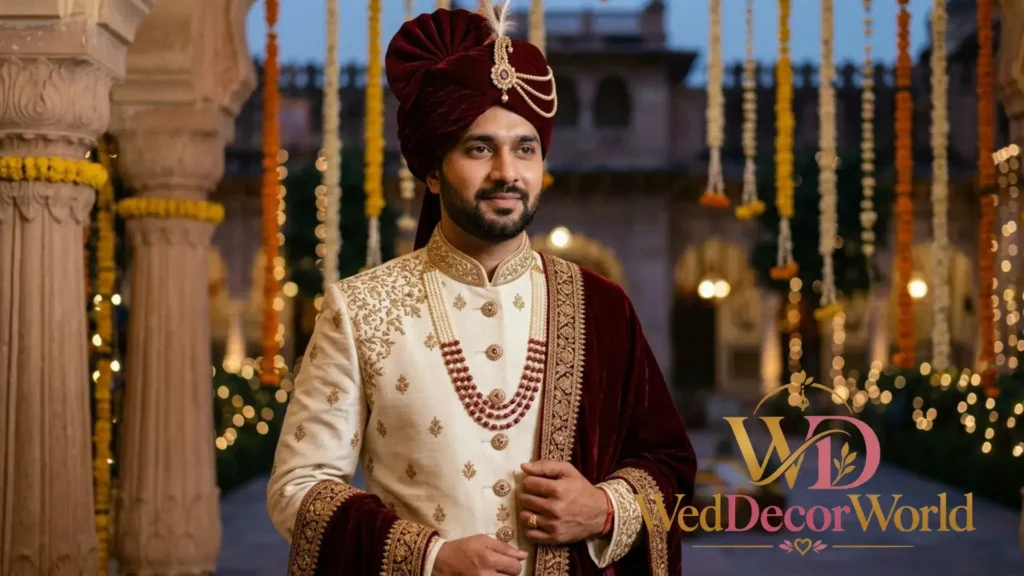
A traditional turban and sherwani make a classic combination for many South Asian weddings. The best color pairing depends on the sherwani’s embroidery, fabric, and overall design.
An ivory sherwani can work with maroon, gold, or ivory headwear, while a dark sherwani may pair well with a complementary neutral or contrasting color. Make sure the turban’s style and formality match the outfit.
- Matching Turban for a Coordinated Wedding Party
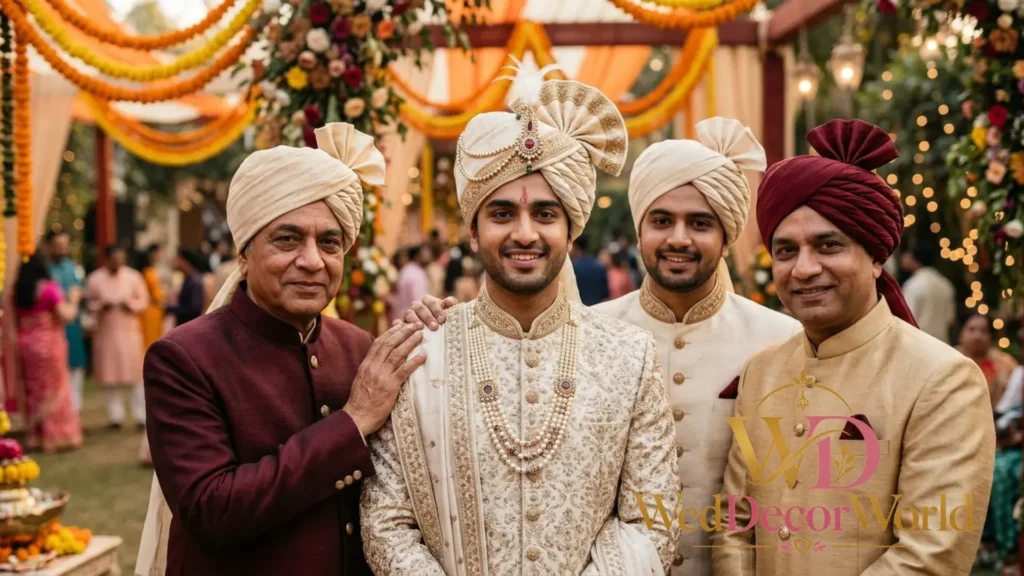
Some grooms choose coordinated turbans for selected members of the wedding party, such as close relatives or ceremonial participants. Matching colors can create a unified appearance in group photographs.
The groom can wear a distinctive version while other participants use simpler coordinating colors. Discuss the arrangement with family members in advance and respect individual cultural or religious preferences.
- Custom-Wrapped Wedding Turban

A custom-wrapped wedding turban is tailored to the groom’s preferred color, fabric, head size, and outfit. A skilled specialist can help create a style that stays secure and looks balanced from different camera angles.
This is a useful option for grooms who have a specific vision or need a wrap that coordinates with detailed embroidery. Arrange a trial before the wedding day to check comfort, fit, and the final appearance.
How to Choose the Right Wedding Turban Style?
Match the Turban with Your Outfit
Start by considering the main color and design of your sherwani, prince coat, or kurta pajama. A contrasting turban can create a striking look, while a matching shade produces a softer, coordinated appearance.
If your outfit has heavy embroidery, a plain turban may provide balance. If your clothing is relatively simple, a patterned or embroidered turban can add visual interest.
Consider the Wedding Function
Different events may call for different styling choices:
- Nikkah: White, ivory, beige, or other understated styles can complement a simple traditional outfit.
- Mehndi: Brighter colors and festive patterns may suit a lively celebration.
- Barat: Maroon, gold, emerald, and ornate styles can complement a formal sherwani.
- Walima: Neutral shades, pastels, or minimalist wraps can work well with a modern outfit.
These are suggestions rather than strict rules. Family traditions and personal preferences should guide the final decision.
Choose Comfortable Fabric
The fabric should feel comfortable and remain secure throughout the ceremony. Silk, cotton blends, velvet, and other traditional fabrics each have different textures and levels of structure.
Consider the weather, venue, and duration of the event. A specialist can recommend a fabric and wrapping method suited to the season.
Check the Fit Before the Wedding
A turban should feel secure without causing discomfort. Arrange a trial with the person who will wrap it, especially if you are choosing a style you have not worn before.
Check the appearance from the front, sides, and back. This helps ensure the turban looks neat in wedding photographs and remains comfortable during the ceremony.
Coordinate Decorative Accessories
A brooch or kalgi can add a traditional finishing touch, but it is not necessary for every style. Choose decorations that complement the fabric, sherwani, and family customs.
A balanced combination usually looks more polished than wearing several large ornaments at once.
1 thought on “25 Traditional Wedding Turban Styles for a Royal Groom Look”