Indian mehndi is known for its detailed patterns, beautiful traditional motifs and artistic storytelling. From intricate floral and paisley arrangements to peacocks, mandalas, vines and bridal scenes, Indian-style henna offers many possibilities for weddings, festivals and special celebrations.
For brides, Indian mehndi can extend across the palms, backs of the hands, fingers and wrists, with some designs continuing toward the forearms and feet. Traditional bridal patterns may also incorporate personalized elements such as bride-and-groom figures, wedding scenes or hidden names and initials.
At the same time, you do not have to choose a very dense bridal design. Modern Indian mehndi can use selected traditional motifs with more open spacing, making the style suitable for engagements, festivals, wedding guests and contemporary celebrations.
In this guide, we explore 30 Indian mehndi designs ranging from classic bridal patterns to modern and relatively simple ideas.
What Makes Indian Mehndi Special?
Indian mehndi is not limited to one specific pattern. Different artists and regional traditions can use different combinations of motifs and levels of detail.
Common elements include:
- Paisleys
- Flowers
- Leaves and vines
- Peacocks
- Mandalas
- Jaal or net patterns
- Fine-line fillers
- Geometric borders
- Bridal figures
- Wedding scenes
- Decorative finger patterns
Traditional Indian bridal mehndi is often highly detailed, while contemporary versions may combine traditional motifs with negative space and cleaner compositions.
30 Beautiful Indian Mehndi Designs
- Traditional Indian Bridal Mehndi

- A traditional Indian bridal mehndi design can combine flowers, paisleys, leaves and intricate fillers across the hands.
- For a complete bridal appearance, the design can extend from the fingertips toward the wrists and forearms.
- Indian Floral Mehndi Design
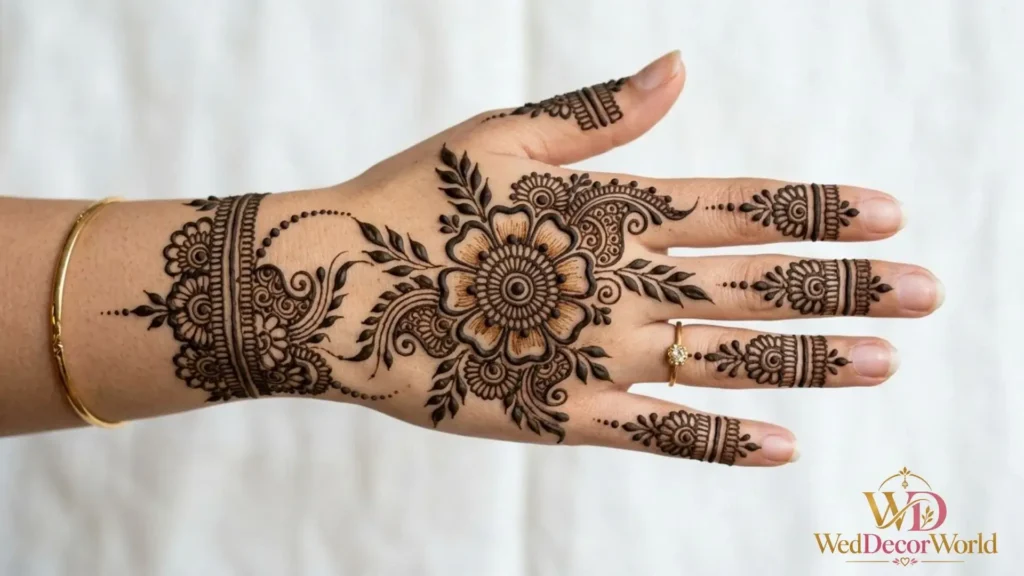
- Floral patterns are a timeless part of Indian mehndi. A large central flower can be surrounded by smaller flowers, leaves and curved vines.
- Use different petal shapes and fine internal detailing to create depth.
- Indian Paisley Mehndi

- Paisley, often called a mango-shaped motif in South Asian design traditions, can become the central element of a mehndi composition.
- Several paisleys can be arranged around the palm and connected with delicate vines.
- This design works well for both traditional and modern weddings.
- Peacock Indian Mehndi

- The peacock is a popular decorative motif in Indian-style mehndi. A detailed peacock can be placed in the center of the palm or along the forearm.
- Surround it with flowers, paisleys and small leaves to create a complete composition.
- Indian Mandala Mehndi

- A mandala creates a natural focal point in the center of the palm.
- Start with a circular center and build outward using petals, fine lines, dots and decorative borders.
- A detailed mandala can be used alone or combined with floral vines.
- Rajasthani-Inspired Indian Mehndi

- Rajasthani-inspired designs often feature intricate pattern work, fine jaal-style details, paisleys and decorative motifs.
- A full-hand design can create a rich traditional appearance suitable for bridal celebrations.
- Indian Dulhan Mehndi
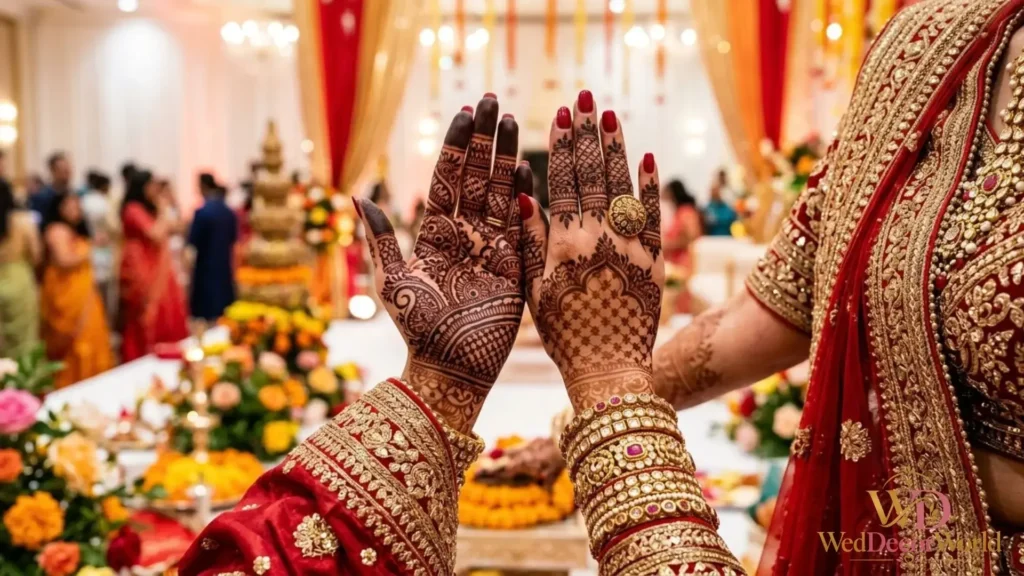
- A dulhan-themed design places the bride as a central visual element.
- The design can show a stylized bride surrounded by flowers, paisleys and decorative borders.
- This creates a personalized bridal look while keeping the hand itself part of the wedding story.
- Dulha Dulhan Mehndi

- For a storytelling design, one palm can feature the bride and the other can feature the groom.
- Additional wedding elements can be placed around the figures.
- This style is particularly popular for brides who want their mehndi to represent their wedding journey. Bridal designs commonly incorporate bride-and-groom imagery and other wedding scenes.
- Indian Jaal Mehndi
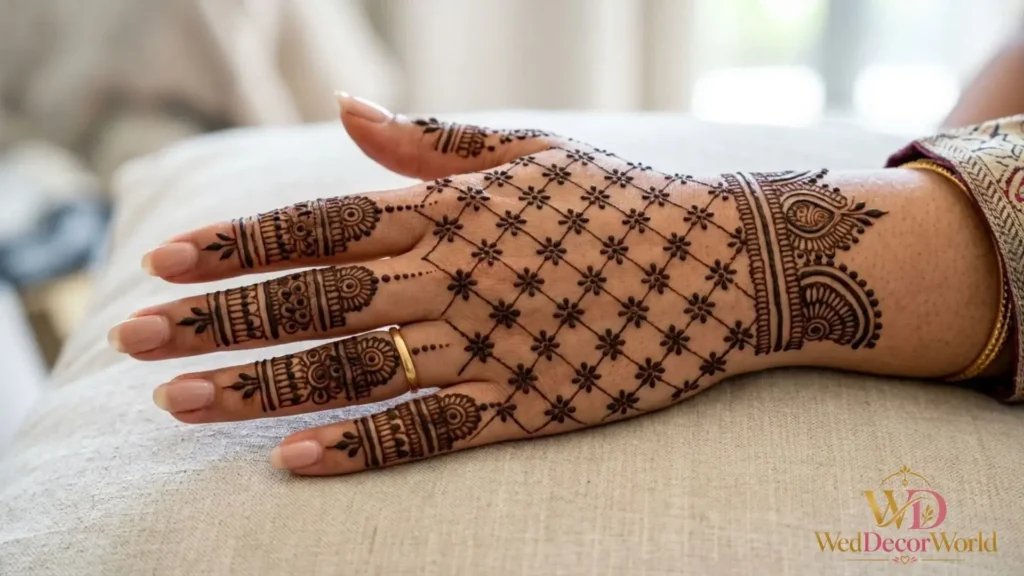
- Jaal refers to a net-like pattern that can cover part of the hand and provide a textured background for other motifs.
- Small flowers, dots or geometric details can be placed within the net structure.
- This approach works especially well on the back of the hand.
- Indian Lotus Mehndi
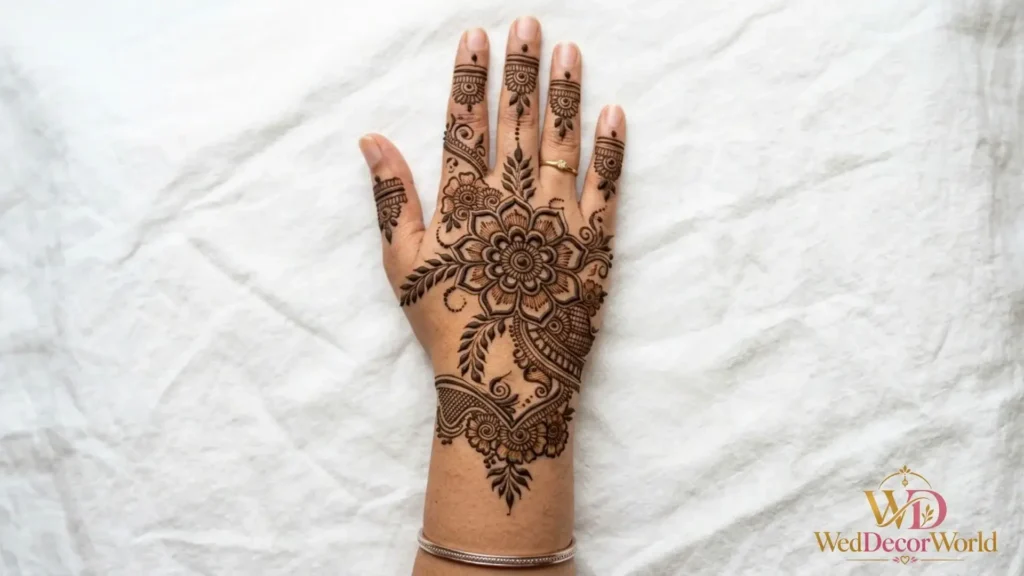
- A lotus can serve as the main motif in a traditional Indian mehndi composition.
- Place a detailed lotus near the wrist or center of the palm and surround it with leaves and decorative lines.
- For a modern appearance, use a larger lotus with more open space around it.
- Indian Floral Paisley Design
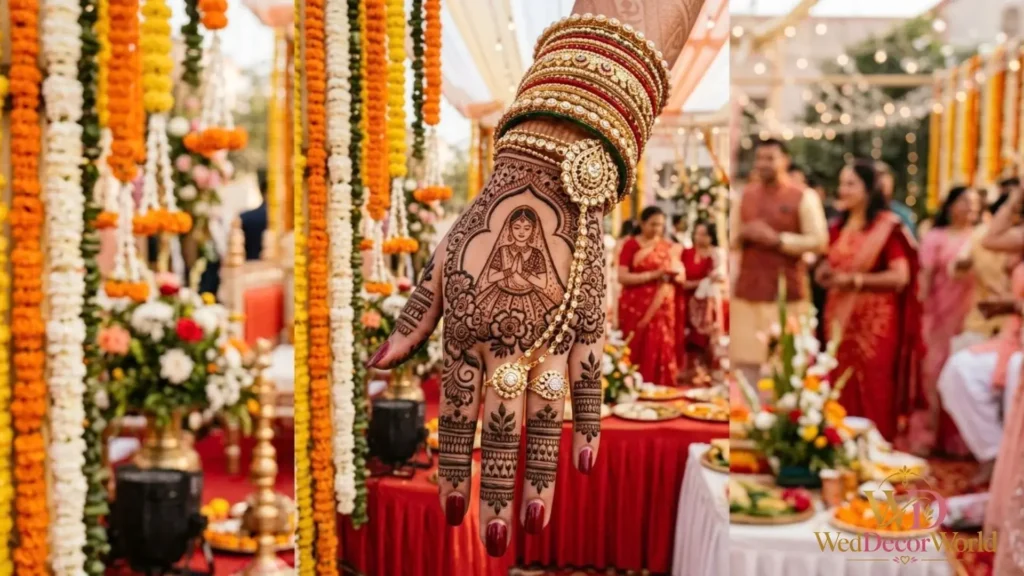
- Combine large paisleys with flowers and leafy vines.
- The paisley can form the main structure while flowers fill selected areas.
- This creates a traditional appearance without requiring every section of the hand to be equally dense.
- Indian Full-Hand Mehndi

A full-hand design covers most of the palm and fingers with multiple motifs.
- Flowers
- Paisleys
- Leaves
- Dots
- Fine fillers
- Geometric details
- Decorative borders
- Indian Back-Hand Mehndi
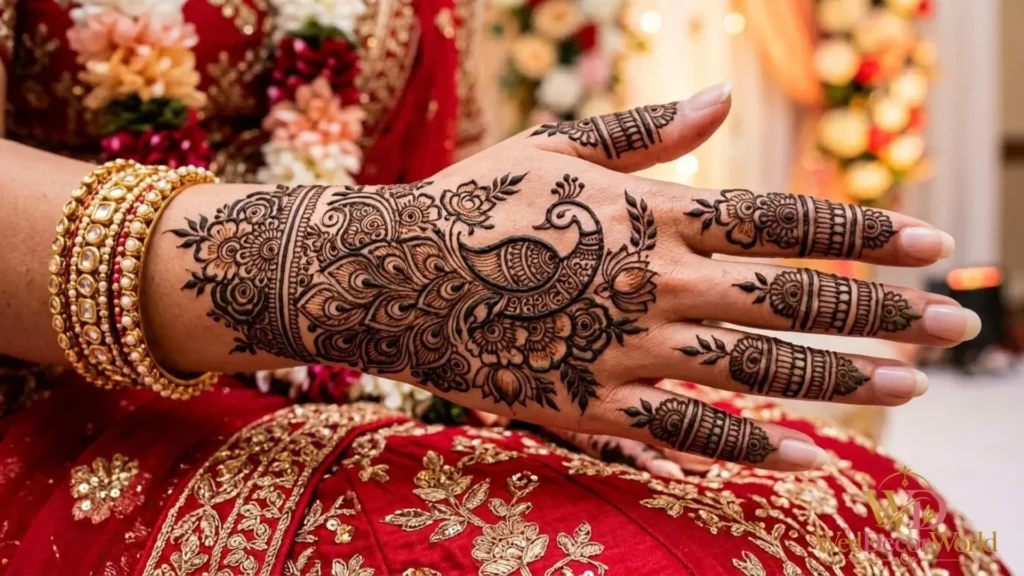
- The back of the hand is an excellent canvas for detailed Indian mehndi.
- A large central motif can be surrounded by jaal work, flowers, paisleys and finger patterns.
- Because the back of the hand is often photographed closely during weddings, clean linework is particularly important.
- Indian Front-Hand Mehndi

- For the front hand, create a central motif and build the surrounding pattern outward.
- A mandala, peacock, lotus or large floral design can become the main focal point.
- The fingers can then be decorated with coordinated bands and fine patterns.
- Indian Finger Mehndi
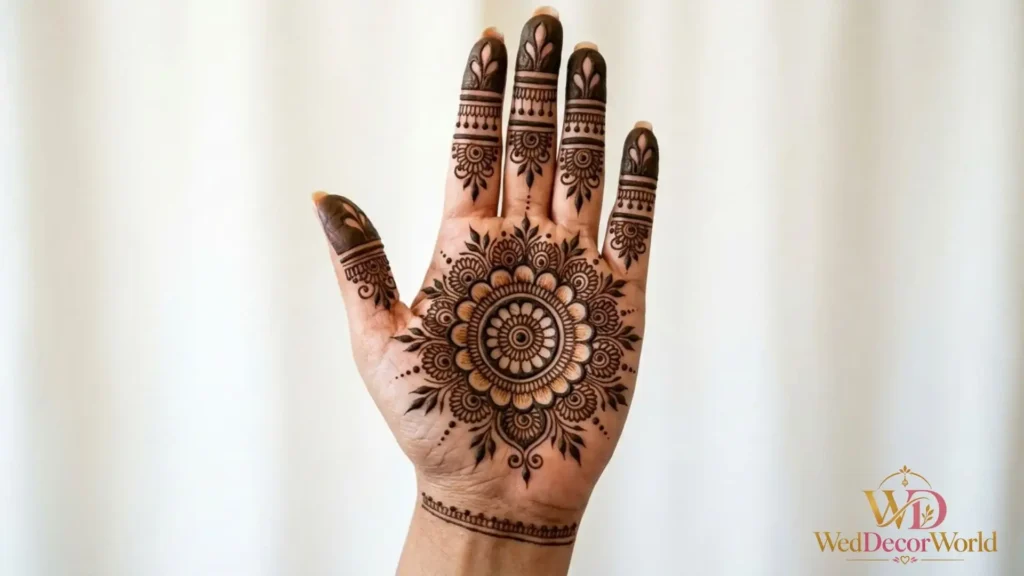
You can also create Indian-style mehndi without covering the whole hand.
- Flowers
- Paisleys
- Lines
- Dots
- Small leaves
- Geometric bands
- Indian Bridal Mehndi With Wedding Scenes
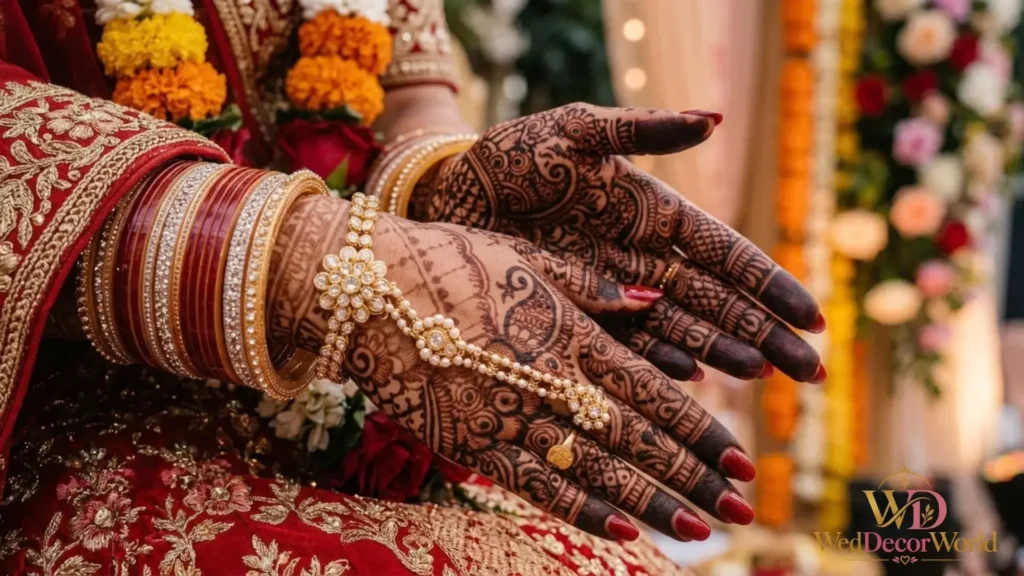
For brides who love storytelling, the entire design can represent moments from the wedding.
- Bride and groom
- Wedding ceremony
- Bridal entrance
- Couple portraits
- Decorative mandap
- Wedding procession
- Indian Elephant Mehndi
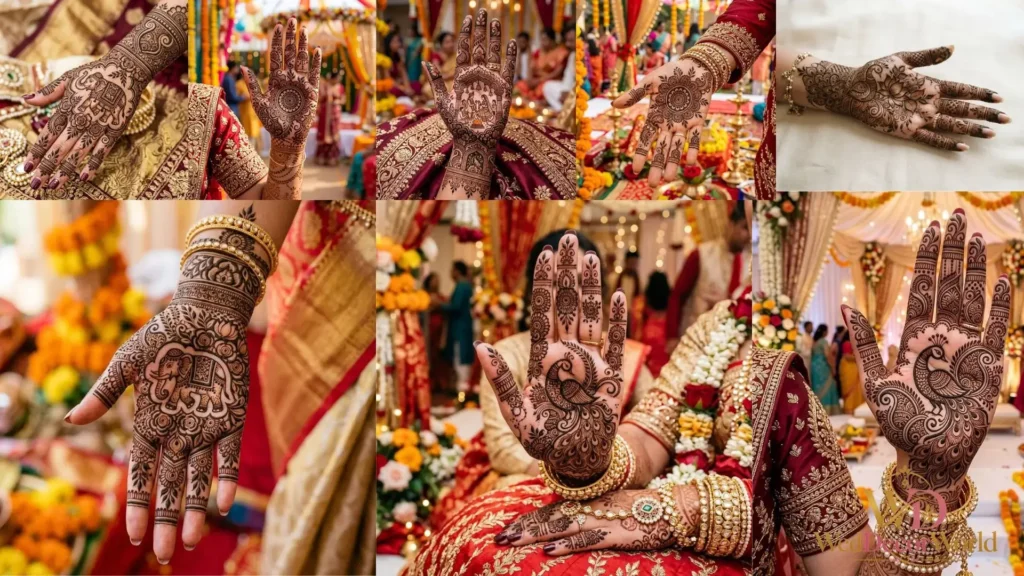
- An elephant motif can give the design a traditional decorative appearance.
- A small elephant can be placed inside a paisley or beneath a floral arch.
- For bridal mehndi, the motif can be surrounded by fine decorative details.
- Indian Peacock and Paisley Mehndi
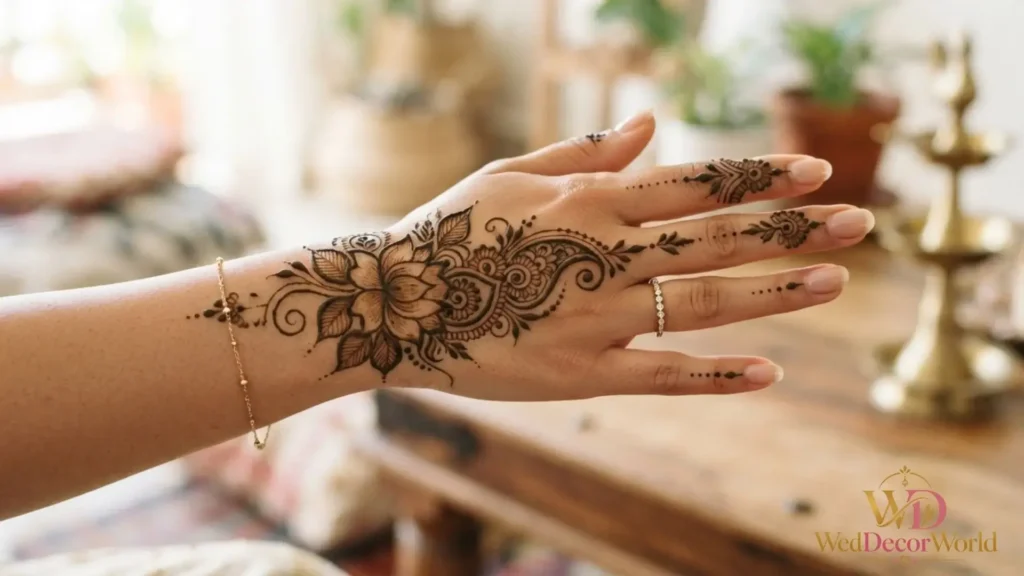
- Combine two classic motifs by placing a peacock beside or inside a large paisley.
- Add small flowers and leaves around the composition.
- This design creates a strong traditional focal point without needing multiple unrelated motifs.
- Indian Bracelet Mehndi

- A bracelet-style wrist pattern can make the mehndi look like traditional jewelry.
- Use flowers, paisleys, dots and decorative borders to create a band around the wrist.
- Extend a small floral trail toward the hand for a connected look.
- Indian Arabic Fusion Mehndi

- Modern artists often combine different visual approaches.
- An Indian-Arabic fusion design can use traditional Indian paisleys and flowers together with the flowing composition and open spacing commonly associated with Arabic-inspired patterns.
- This is a good option for brides who want traditional motifs with a lighter overall appearance.
- Simple Indian Mehndi

- A simple Indian mehndi design can use just a few traditional elements.
- Try one paisley, a floral vine, a small mandala and several dots.
- Leave plenty of natural skin visible to create a contemporary finish.
- Modern Indian Mehndi

- Modern Indian mehndi can combine traditional motifs with cleaner lines and more negative space.
- For example, use one large floral motif on the back of the hand with a thin vine leading toward the wrist.
- This creates a modern look while keeping the Indian character of the design.
- Indian Geometric Mehndi
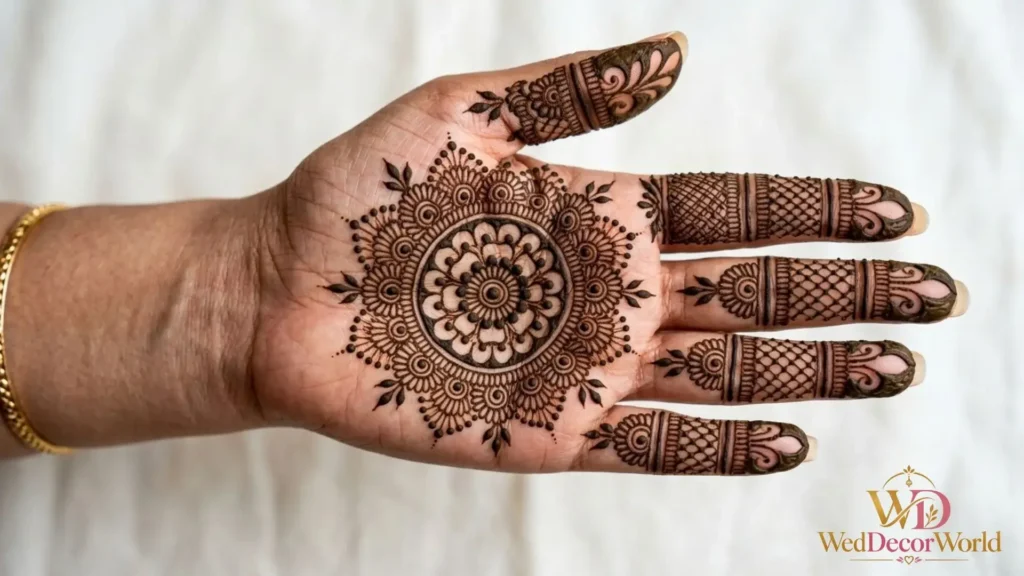
- Geometric borders, diamonds, grids and symmetrical lines can be incorporated into Indian mehndi.
- Combine geometric sections with flowers and paisleys to prevent the design from appearing too rigid.
- This style works especially well for contemporary bridal outfits.
- Indian Floral Wrist Mehndi

- For a lighter design, focus on the wrist.
- Create a floral bracelet using roses, lotus petals, leaves and tiny dots.
- A small vine can extend from the bracelet onto the back of the hand.
- Indian Feet Mehndi
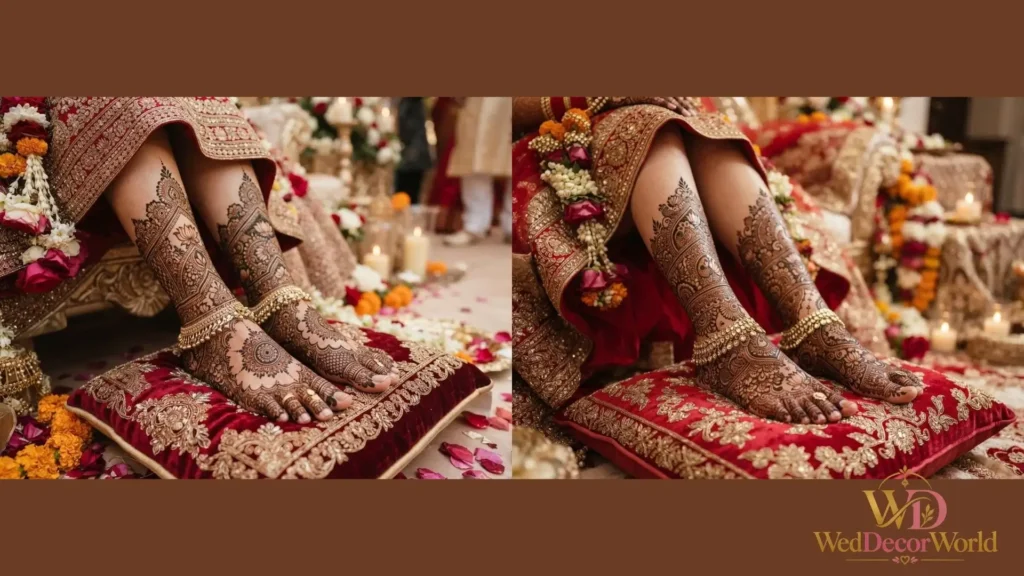
Indian bridal mehndi can also extend to the feet.
- Floral motifs
- Paisleys
- Anklet-inspired borders
- Leaves
- Mandalas
- Fine-line details
- Indian Bridal Mehndi With Hidden Name

- Personalization can make bridal mehndi more meaningful.
- A groom’s name or initials can be incorporated subtly into a paisley, flower, border or another section of the pattern.
- Keep the hidden detail small so that it does not distract from the main artwork.
- Indian Lotus and Peacock Design

- Combine a lotus with a peacock for a detailed traditional composition.
- Place the lotus near the center of the palm and use the peacock as a secondary focal point.
- Surround both motifs with fine leaves and paisleys.
- Indian Mandala and Paisley Design

- A central mandala can be surrounded by several paisleys arranged symmetrically.
- Add small dots and flowers between the motifs.
- This creates a structured design that works especially well for the front hand.
- Contemporary Indian Bridal Mehndi
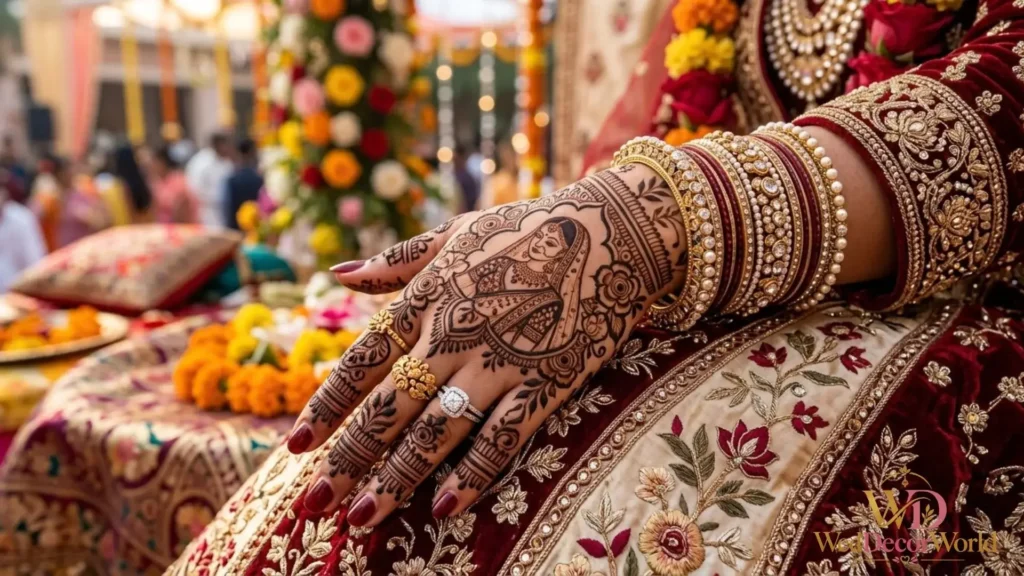
- A contemporary bridal design can use traditional Indian motifs without covering every inch of the hand.
- Choose one major focal point, such as a peacock or mandala, and surround it with carefully spaced flowers, paisleys and leaves.
- This approach creates a bridal look that feels detailed while remaining visually clear.
- Complete Indian Bridal Mehndi

For the ultimate traditional bridal look, combine several elements into one coordinated design:
- Peacock motifs
- Paisleys
- Flowers
- Mandalas
- Jaal patterns
- Bride and groom figures
- Decorative fingers
- Wrist bands
- Forearm details
Indian Mehndi for Different Occasions
Indian Mehndi for Weddings
- Brides can choose detailed full-hand designs, storytelling mehndi, peacock motifs, mandalas and paisleys.
- Traditional bridal designs often extend beyond the hands to the wrists, forearms and feet.
Indian Mehndi for Engagements
- For an engagement, consider a medium-coverage design with floral motifs, a small mandala or elegant paisley patterns.
Indian Mehndi for Festivals
- A lighter design can be more practical for festivals. Floral vines, finger mehndi and small mandalas can provide a festive appearance without extensive application.
Indian Mehndi for Wedding Guests
- Wedding guests can choose a simpler version of Indian mehndi using one or two major motifs and less overall coverage.
How to Choose the Right Indian Mehndi Design?
Consider Your Wedding Outfit
A heavily embroidered lehenga or saree can pair beautifully with a detailed traditional design. If your outfit already has many visual details, a slightly more open mehndi pattern can create balance.
Think About Coverage
Decide whether you want:
- Fingers only
- Wrist and palm
- Front hand
- Back hand
- Full hands
- Hands and forearms
- Hands and feet
Choose Your Main Motif
Select one major element such as a peacock, lotus, mandala, paisley or floral arrangement.
Personalize the Design
You can discuss meaningful elements with your mehndi artist, such as initials, wedding dates or symbolic wedding scenes.
Match Both Hands
Your two hands do not have to be exact mirror images. They can use different motifs while maintaining the same overall style.
Tips for a Beautiful Indian Mehndi Design
- Choose a skilled artist.
Fine Indian mehndi requires consistent linework and detailed pattern placement.
- Decide the coverage in advance.
A full bridal design requires considerably more time than a small hand pattern.
- Keep the main motif visible.
Do not overcrowd the central design with too many competing details.
- Think about photography.
Important motifs should remain recognizable from a normal viewing distance.
- Personalize carefully.
Names, initials and wedding scenes can add meaning without taking over the entire design.
- Coordinate hands and feet.
If both areas are decorated, repeating selected motifs can create a unified bridal look.
Common Indian Mehndi Mistakes to Avoid
Choosing a Design Without Considering Coverage
A reference image may look beautiful but require several hours of application. Discuss the expected coverage with your artist beforehand.
Using Too Many Different Motifs
Flowers, peacocks, paisleys and geometric elements can work together, but they should have a clear visual relationship.
Ignoring the Back of the Hand
The back of the hand is often highly visible in wedding photographs, so its composition deserves as much attention as the palm.
Making Every Area Equally Dense
A focal point and supporting areas usually create a more organized composition than filling every space with the same level of detail.
Copying a Design Without Adapting It
Hands differ in size and shape. A good artist can adapt a reference design to fit your hand naturally.
1 thought on “30 Beautiful Indian Traditional & Modern Mehndi Designs”