
Arabic Mehndi Designs are loved for their graceful floral patterns, flowing vines, bold strokes, and beautiful use of open space. Unlike very dense henna styles, Arabic mehndi often allows individual motifs to stand out, creating a look that feels elegant, artistic, and modern.
Whether you are a bride preparing for your wedding, a bridesmaid looking for a stylish design, or a wedding guest who prefers something simple, Arabic mehndi offers plenty of options. You can choose a delicate floral trail for a minimal look, a bold rose pattern for a statement style, or a detailed bridal design that extends across the hands.
In this guide, we have collected 30 Arabic mehndi design ideas covering simple, bridal, front-hand, back-hand, floral, modern, and easy styles. Use these ideas as inspiration when choosing a design that matches your outfit, wedding event, and personal style.
What Makes Arabic Mehndi Designs Special?
Arabic mehndi is often recognized by its flowing composition and prominent floral and leafy motifs. Designs may move diagonally across the hand rather than filling every part of the skin, giving the pattern plenty of breathing space.
Common elements include flowers, leaves, vines, paisleys, dots, curved lines, and decorative finger patterns. The combination can create anything from a very simple design to an elaborate bridal look.
One of the most appealing features of Arabic mehndi is its versatility. A single floral vine can look beautiful for a casual celebration, while several connected motifs can be developed into a more elaborate wedding design.
Arabic mehndi also works well with both traditional and contemporary outfits. Its open composition can complement heavily embroidered clothing without making the overall look feel overly crowded.
30 Arabic Mehndi Designs for Weddings
- Simple Floral Arabic Mehndi
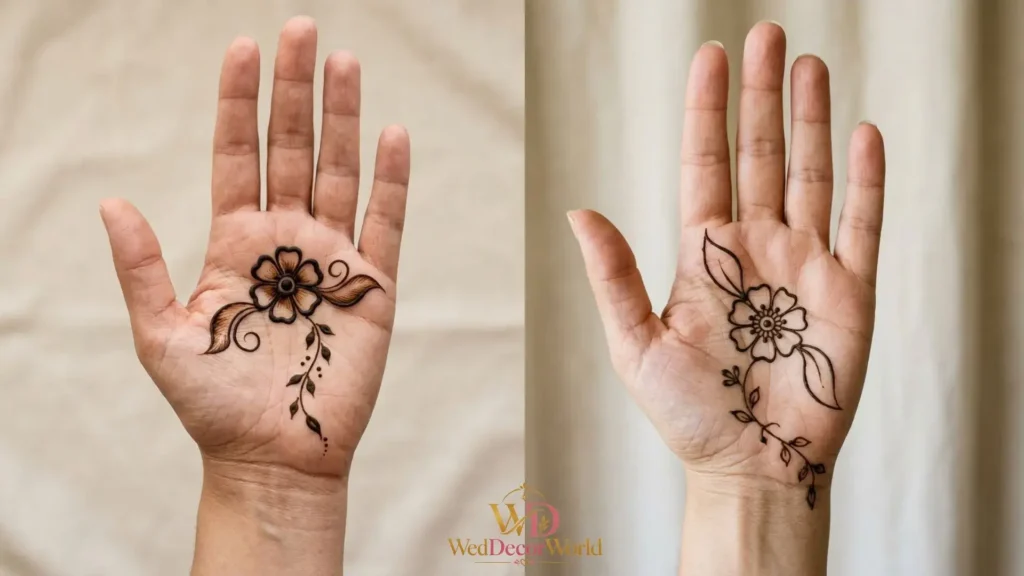
A simple floral Arabic mehndi design is a great choice for anyone who prefers elegance without heavy coverage. A large flower can be placed near the center of the palm, with a thin vine extending toward the wrist or fingers.
- Flowing Vine Arabic Mehndi
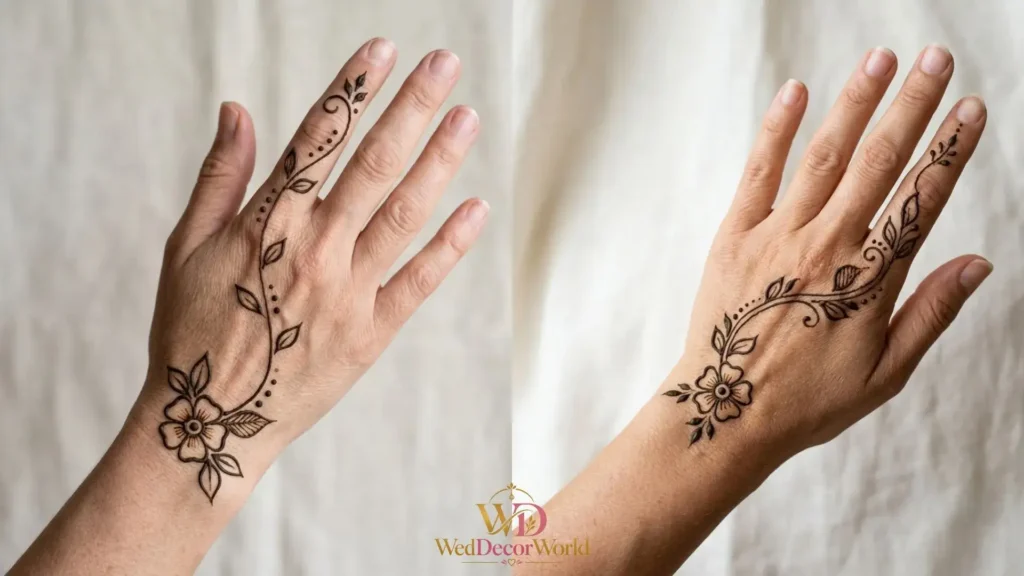
Flowing vines are one of the most recognizable elements of Arabic-inspired henna. This design can start near the wrist and gradually move toward the palm, connecting leaves, flowers, and small decorative elements.
- Arabic Rose Mehndi Design
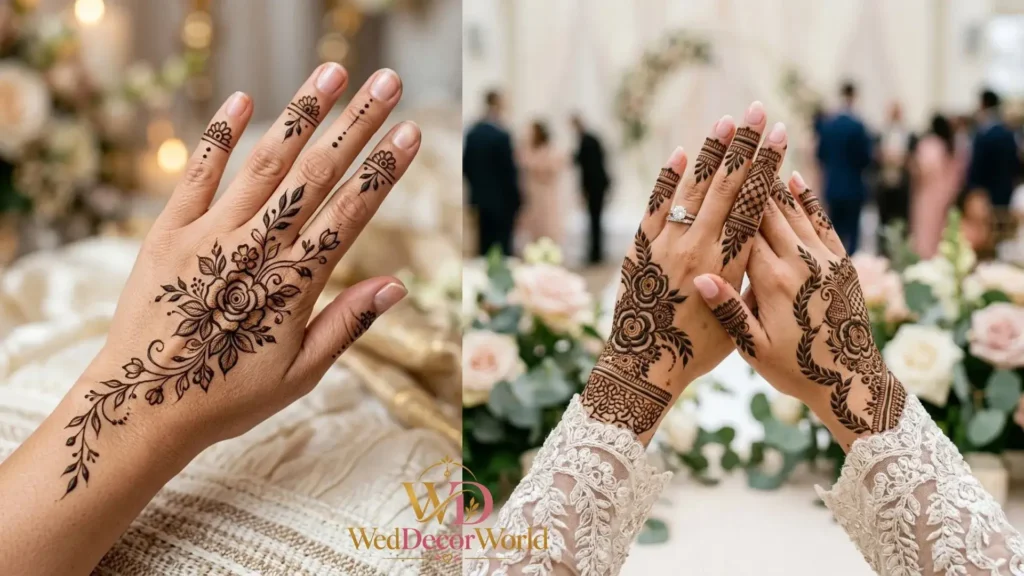
Roses can become the main focus of an Arabic mehndi pattern. A large rose surrounded by leaves creates a bold centerpiece, while smaller buds can extend along the fingers or wrist.
For a modern appearance, keep the surrounding area relatively open so that the rose remains the focal point.
- Minimal Arabic Mehndi Design
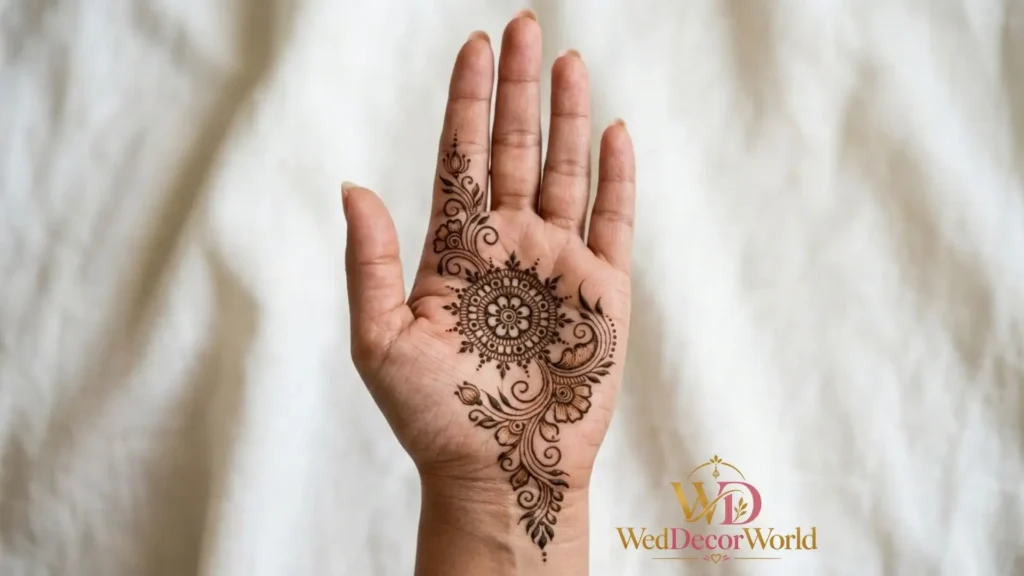
Minimal Arabic mehndi is ideal for brides and guests who do not want their hands completely covered. A few carefully positioned flowers, leaves, and curved vines can create an elegant design without requiring extensive coverage.
- Arabic Floral Trail Mehndi
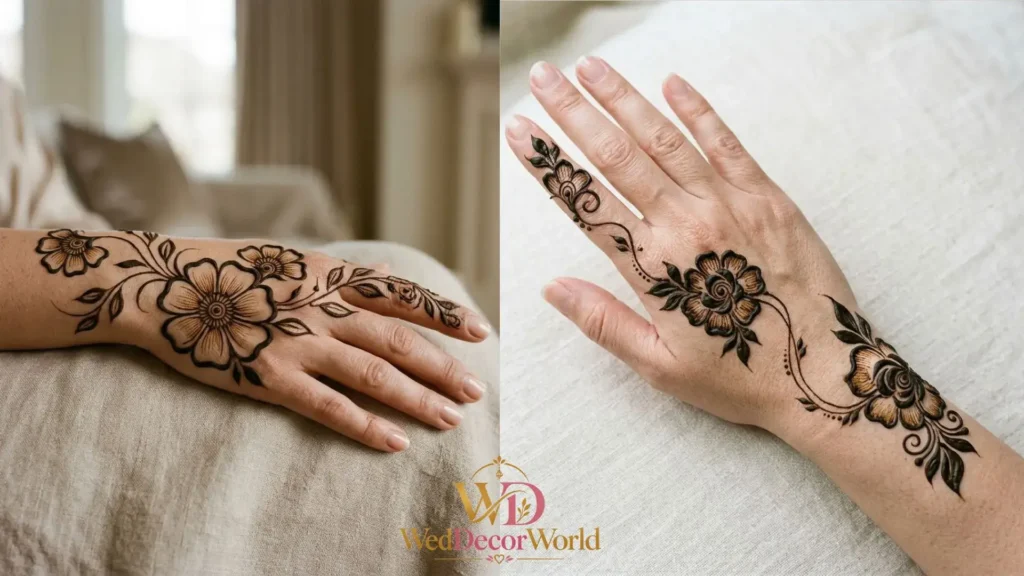
A floral trail can move diagonally across the hand from one side of the wrist toward the opposite fingers. Several flowers can be connected with thin vines and leaves. This layout creates movement and works especially well in photographs because the design follows the natural shape of the hand.
- Arabic Bridal Mehndi with Bold Flowers
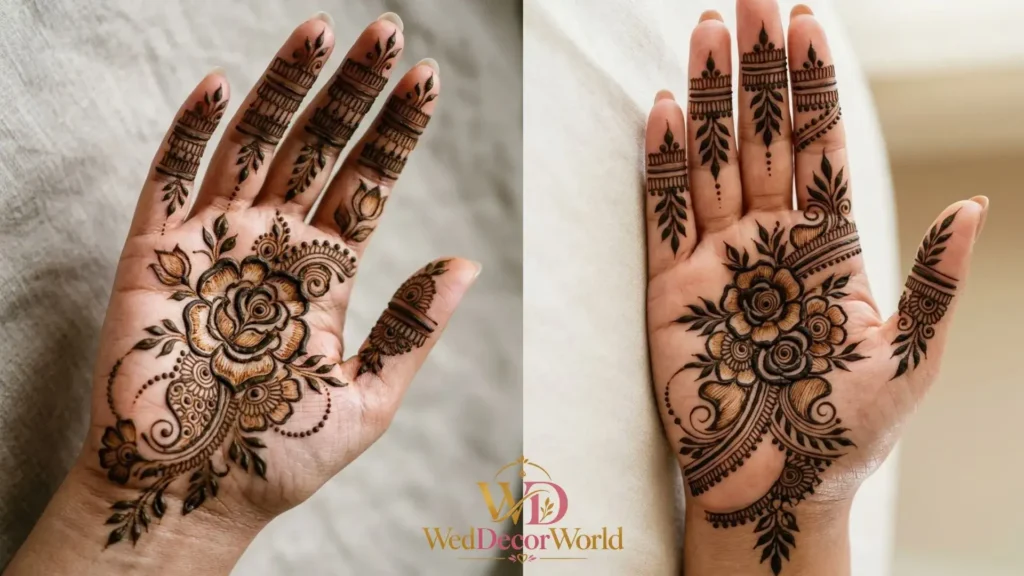
For a more traditional bridal appearance, combine large flowers with bold leaves, paisleys, and detailed finger patterns. Instead of filling every available space, keep selected areas open between the major motifs. This creates a balanced design that feels detailed without becoming visually overwhelming.
- Arabic Mehndi with Paisley Motifs
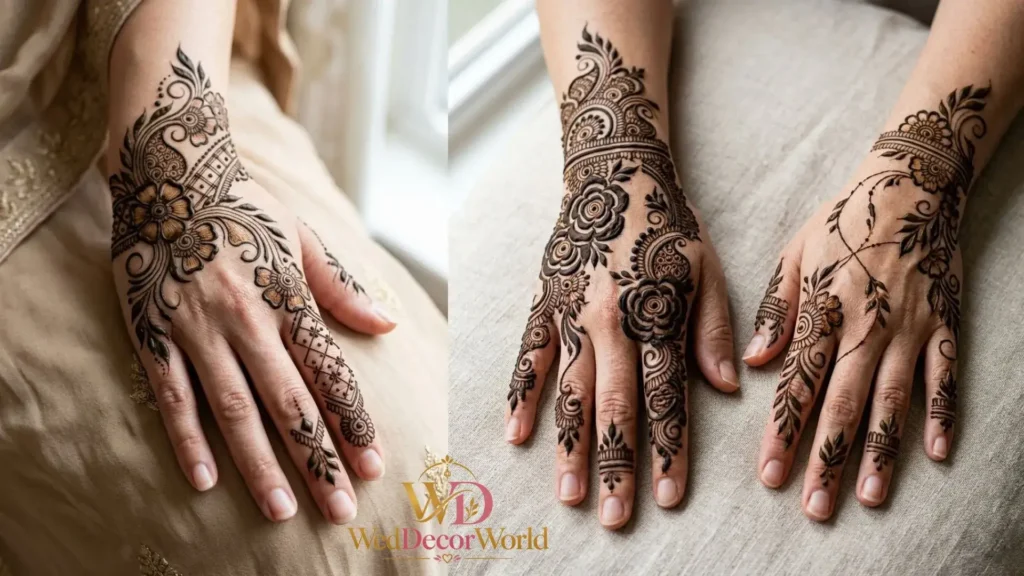
Paisleys add a classic decorative element to Arabic mehndi. A large paisley can be placed on the palm and surrounded by leaves, flowers, and curved lines. Smaller paisleys can then be used on the fingers or wrist to connect the composition.
- Arabic Bracelet Mehndi
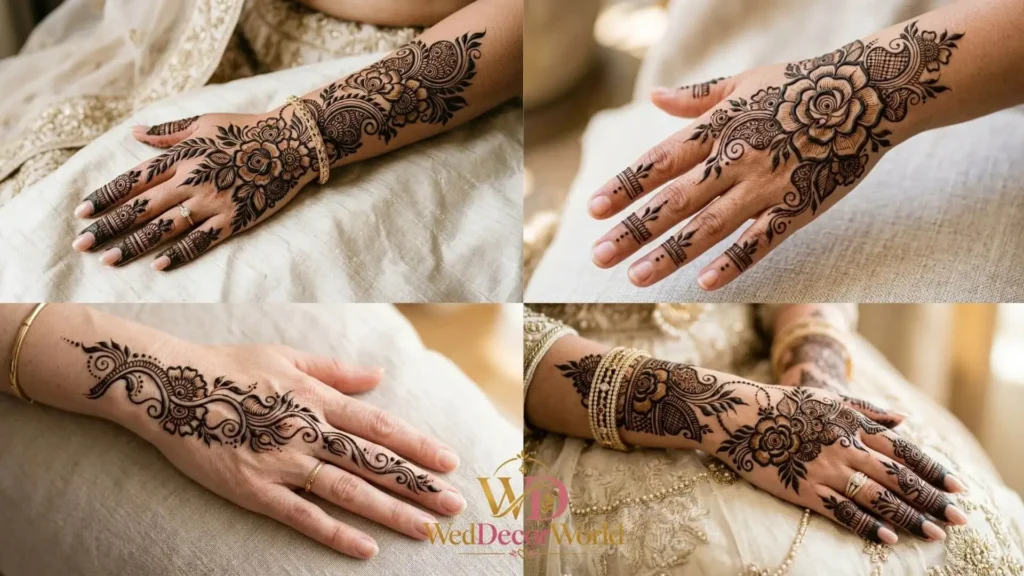
A bracelet-style Arabic mehndi design focuses on the wrist. A decorative band can be created using flowers, leaves, dots, and geometric details. A small vine can extend from the bracelet toward the palm to connect the wrist design with the rest of the hand.
- Arabic Mehndi with Leafy Vines
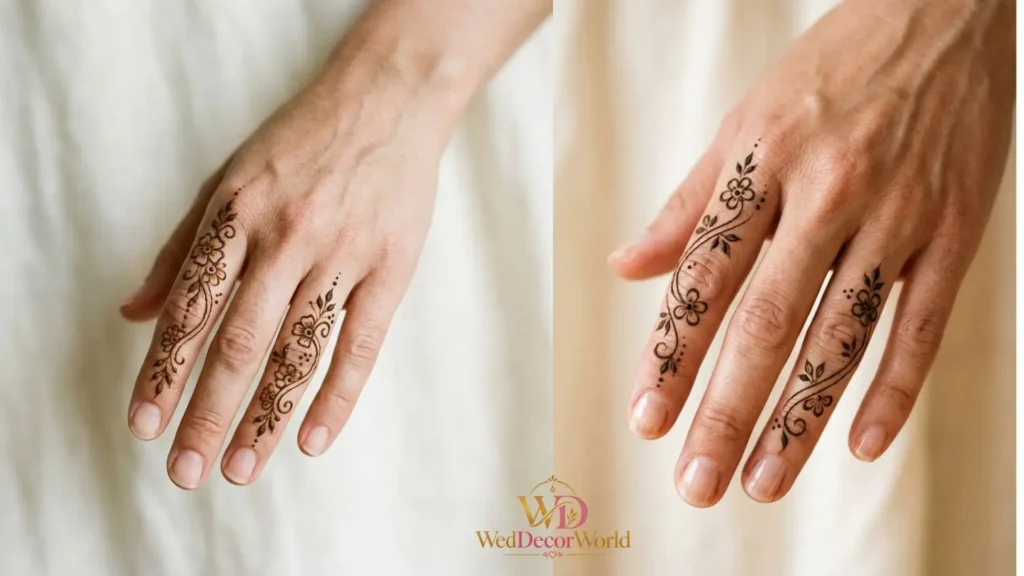
If you prefer botanical patterns over large flowers, a leafy vine design can be an excellent option. Different leaf shapes can be arranged along a curved line, with small flowers added as accents. The result is simple, natural, and elegant.
- Elegant Arabic Finger Mehndi
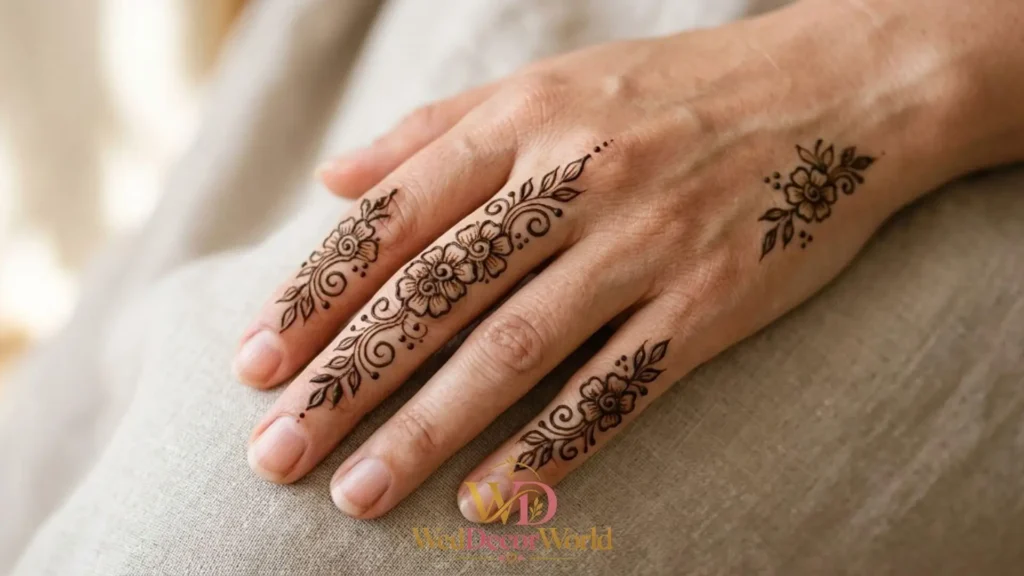
You do not always need a large palm design to create a beautiful henna look. Detailed fingers combined with a small floral motif on the back or center of the hand can create a stylish appearance. This approach is particularly useful for people who want minimal coverage.
Arabic Mehndi Designs for the Front Hand
- Front Hand Floral Vine
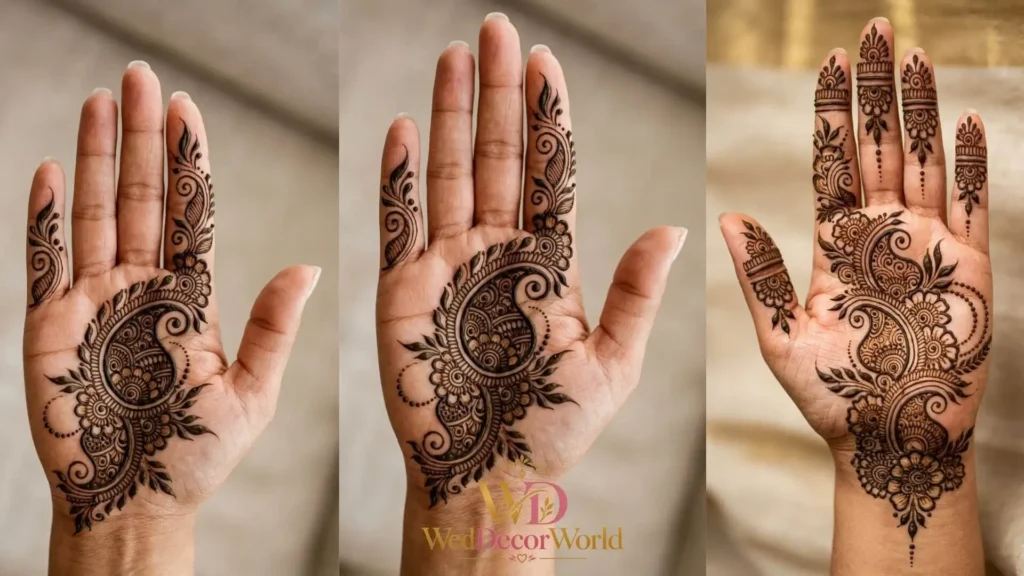
A long floral vine can begin near the wrist and travel toward the fingers across the palm.
Use different flower sizes to create visual variety. Larger flowers can serve as focal points, while small leaves and buds fill the connecting areas.
This design looks graceful while maintaining the open character associated with many Arabic mehndi patterns.
- Diagonal Arabic Mehndi Design
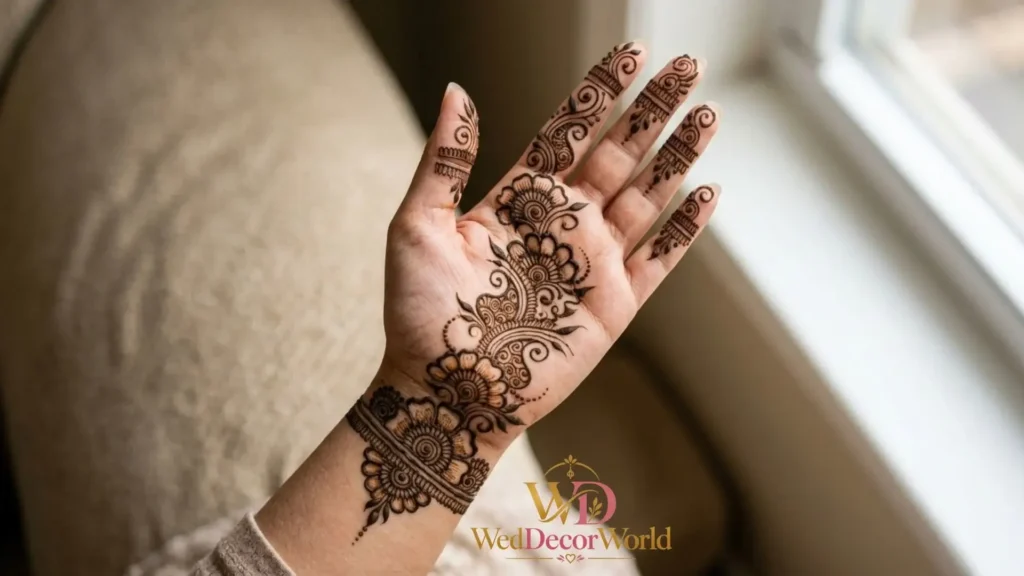
A diagonal composition can make the hand appear longer and create a natural visual flow.
The design can start from the lower corner of the palm and move toward the opposite side near the fingers. Flowers, paisleys, and leaves can be connected along the diagonal trail.
- Arabic Mandala and Floral Combination
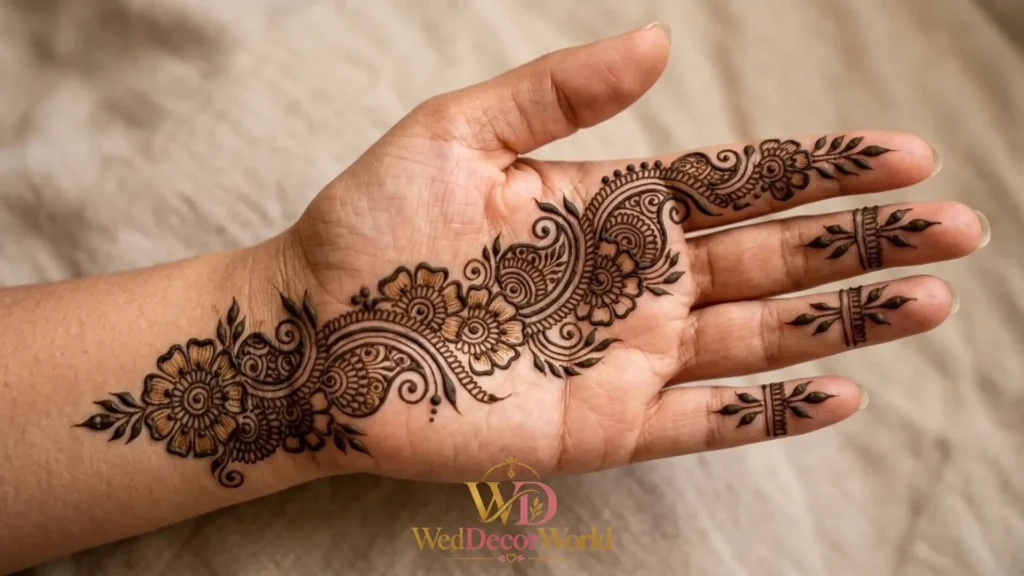
A small circular motif can be placed in the center of the palm and surrounded by floral elements.
The mandala provides a defined focal point, while Arabic-style vines and leaves create movement around it.
This combination works particularly well for people who want a design that blends structured and flowing elements.
- Front Hand Arabic Rose Design
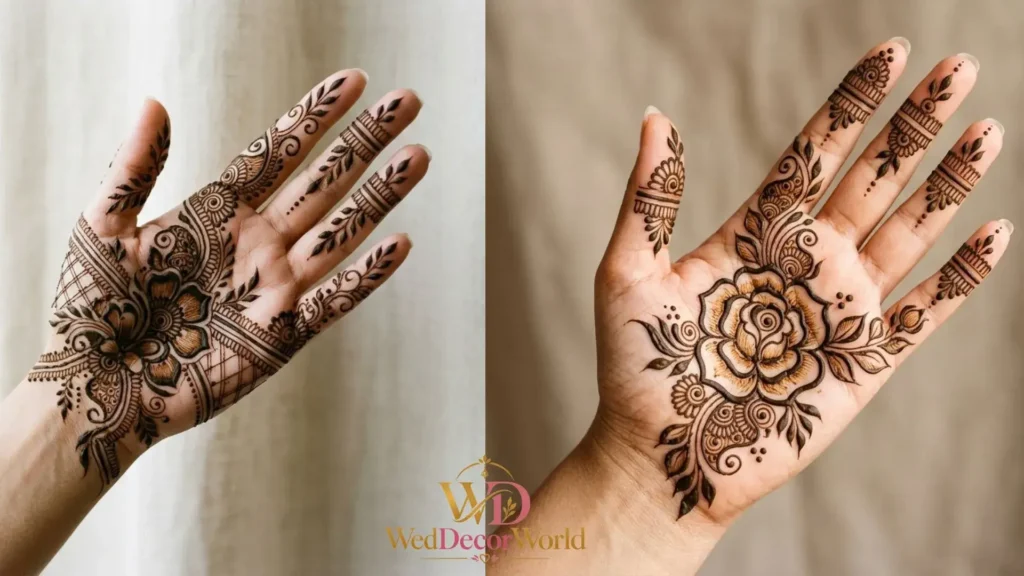
A large rose placed on the palm can be paired with smaller flowers and leafy vines.
Keep the fingers relatively simple if you want the central rose to remain the main attraction.
For a heavier bridal appearance, detailed finger patterns can be added without covering every section of the palm.
- Modern Front Hand Arabic Mehndi
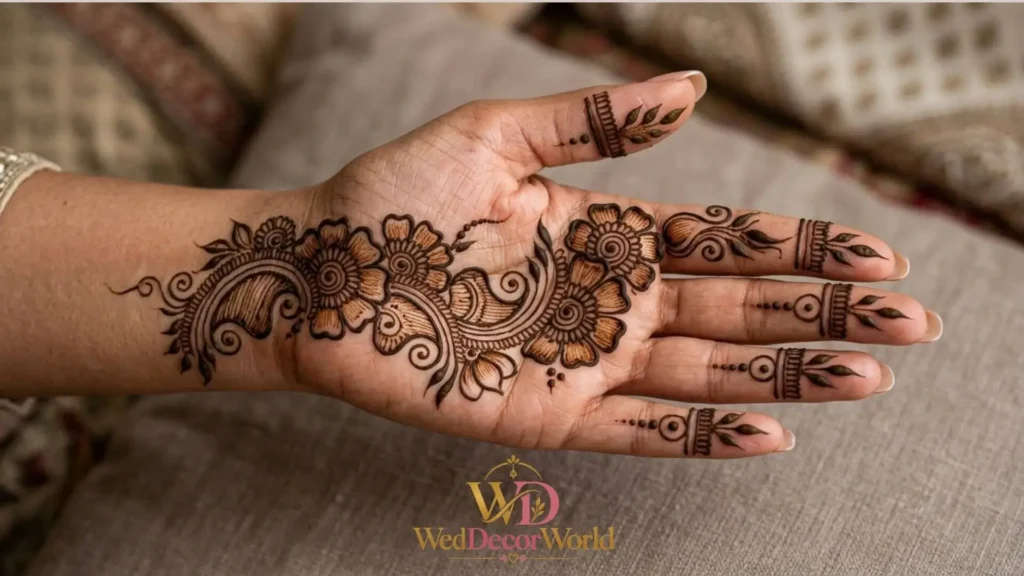
Modern Arabic mehndi can combine bold flowers, geometric lines, negative space, and delicate finger details.
The design does not have to follow a perfectly symmetrical layout. An asymmetrical composition can give the pattern a more contemporary appearance.
Arabic Mehndi Designs for the Back Hand
- Back Hand Floral Arabic Mehndi
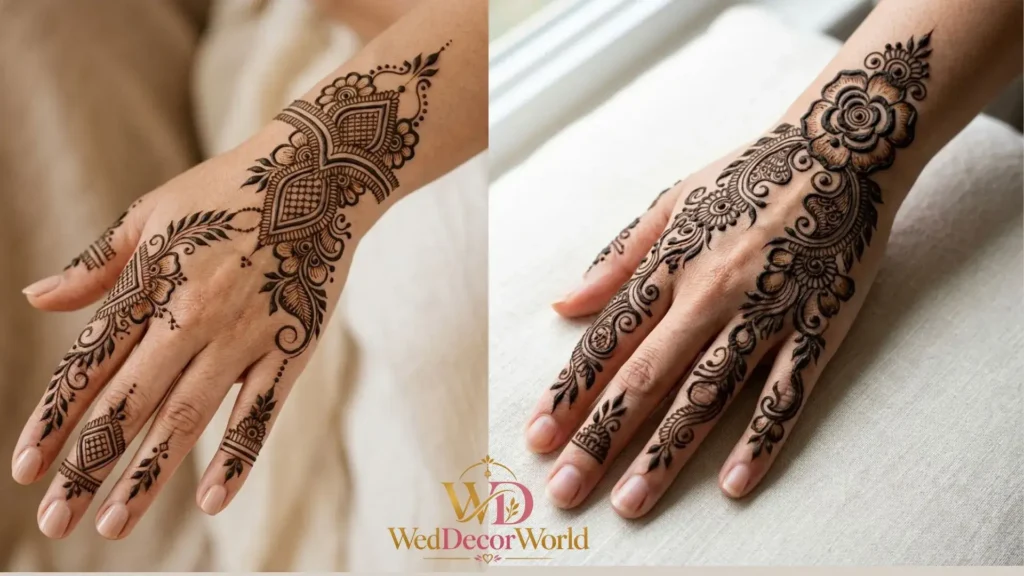
A floral design placed on the back of the hand can create a sophisticated bridal look.
One large flower can be positioned near the center, with leaves and vines extending toward the wrist and fingers.
This style works especially well when paired with simple finger detailing.
- Arabic Back Hand Bracelet Design
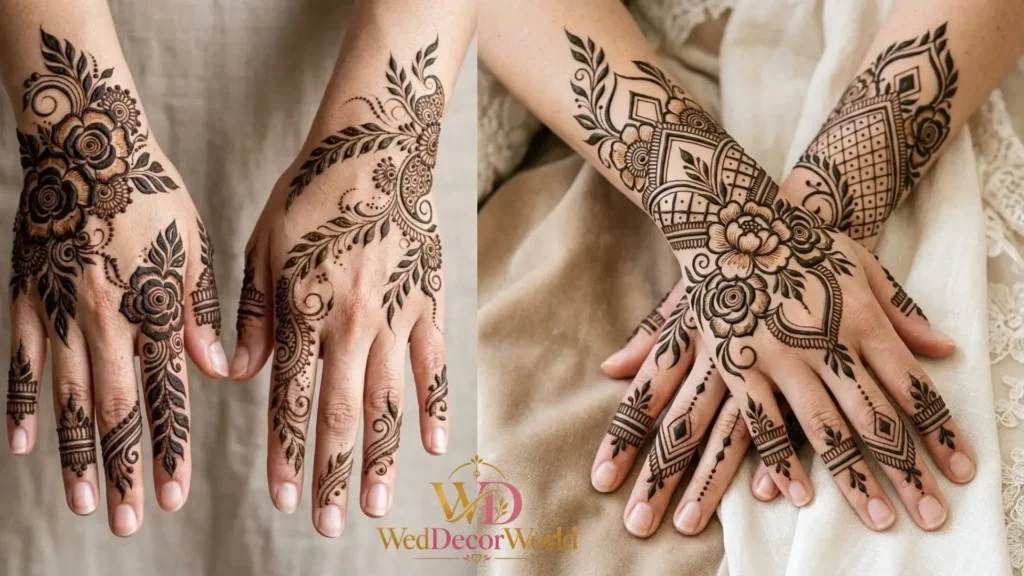
A bracelet-inspired wrist pattern can be connected to a floral trail running across the back of the hand.
This creates the impression of decorative jewellery while keeping the design relatively light.
- Back Hand Rose and Vine Design
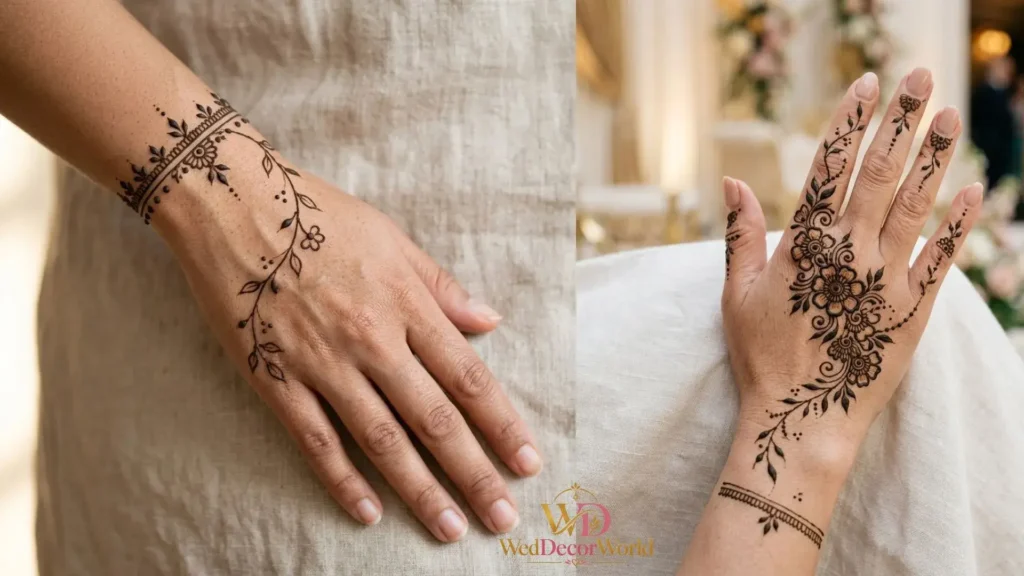
A rose combined with a flowing vine can create a romantic look.
The rose should remain visually dominant, while smaller leaves and buds can guide the eye toward the fingers.
This is a good option for people who want a recognizable floral design without heavy full-hand coverage.
- Geometric Arabic Back Hand Mehndi
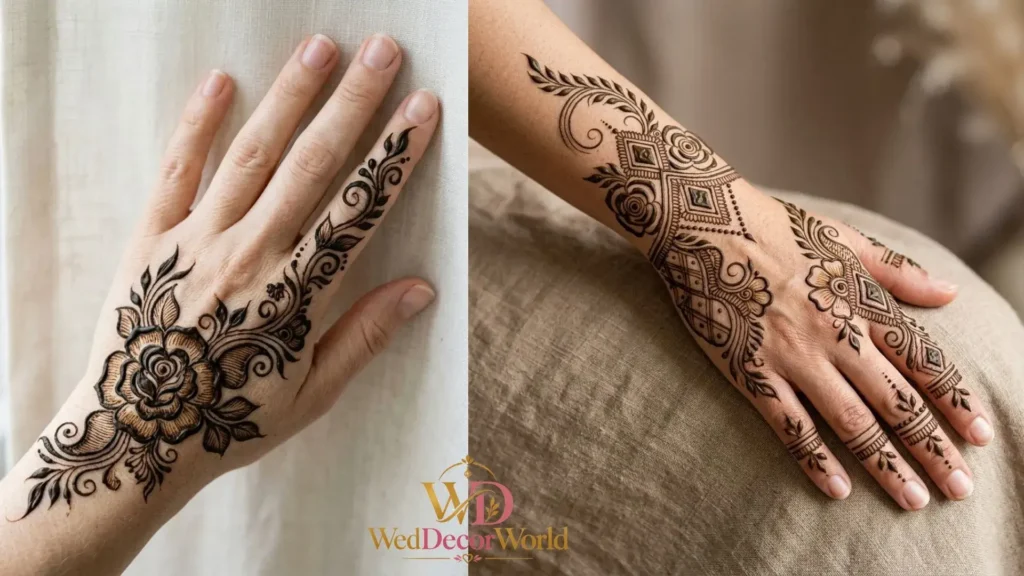
For a contemporary appearance, combine Arabic floral elements with geometric shapes.
Triangles, diamonds, circles, and structured lines can be used carefully alongside leaves and flowers.
The geometric elements should complement rather than overpower the organic floral pattern.
- Simple Back Hand Arabic Mehndi
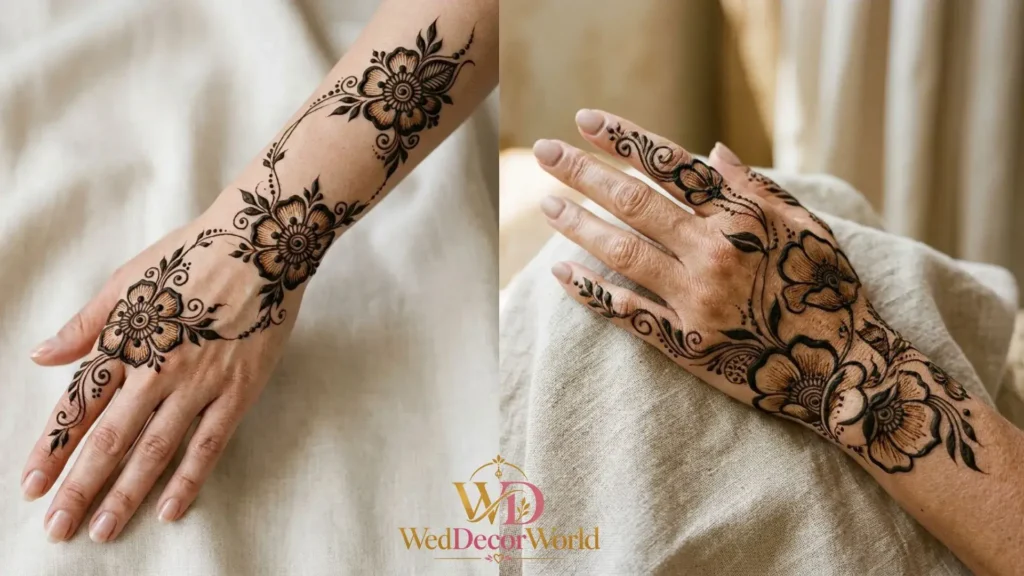
A simple back-hand design can use one central flower, a few leaves, and a delicate finger pattern.
This style takes less space and can be suitable for smaller celebrations or people who prefer a clean appearance.
Modern Arabic Mehndi Designs
- Contemporary Floral Arabic Mehndi
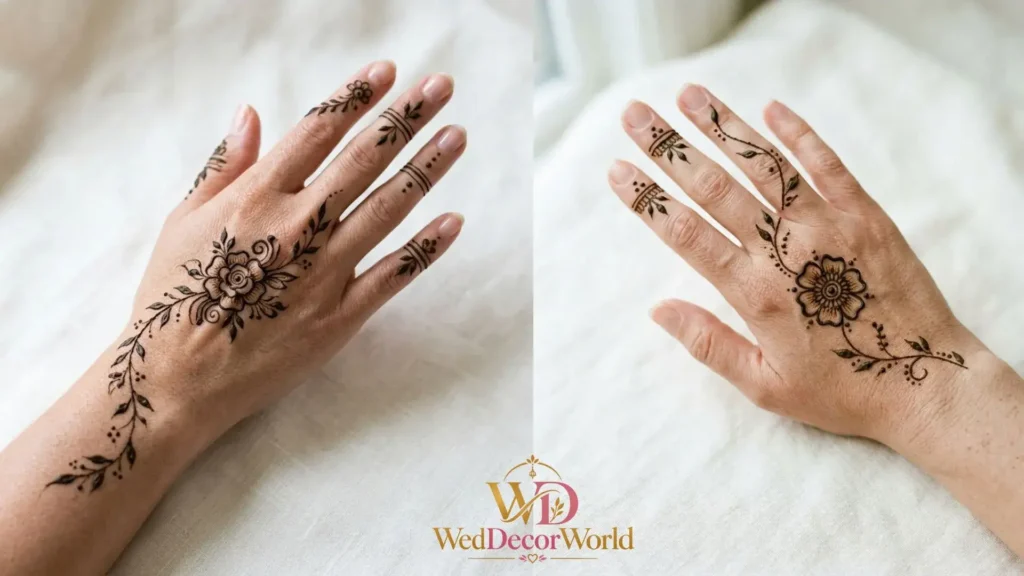
A contemporary floral design can use oversized flowers with simplified leaves and thinner connecting lines.
The combination of bold and delicate elements creates contrast while keeping the overall pattern modern.
- Arabic Mehndi with Negative Space
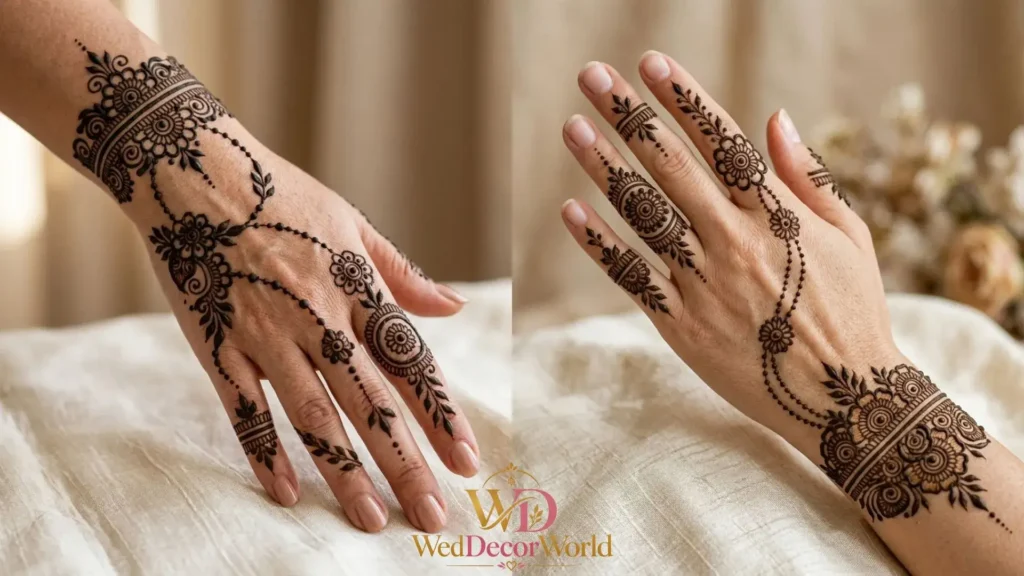
Negative space is an important part of many modern Arabic-inspired designs.
Instead of filling the entire hand, the artist can deliberately leave open areas between flowers, vines, and geometric elements.
- Jewellery-Inspired Arabic Mehndi
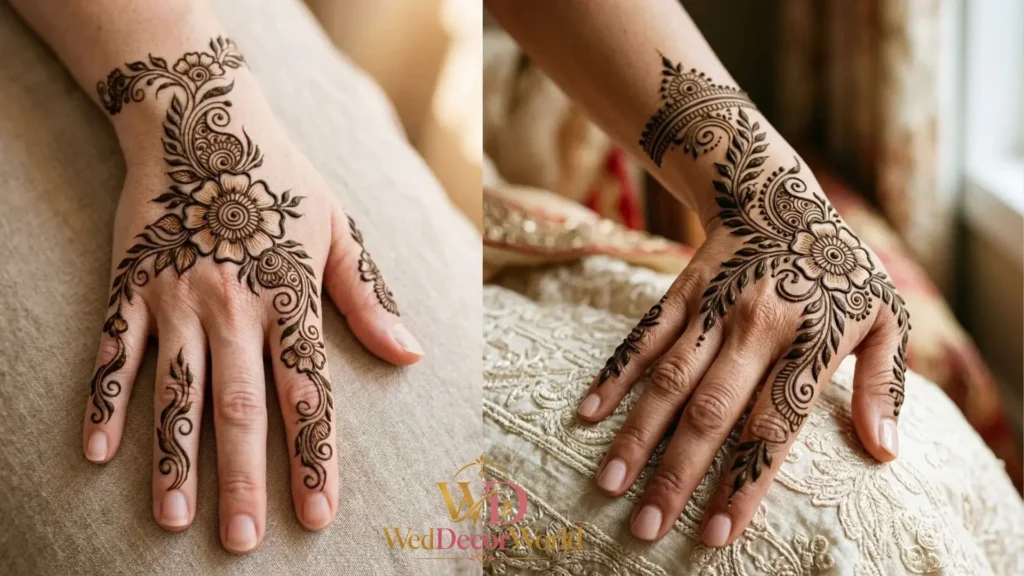
Jewellery-inspired patterns can make the mehndi look like bracelets, rings, chains, or decorative hand accessories.
A small ring motif on a finger can connect to a floral trail running toward the wrist.
This is especially attractive when the bride plans to wear statement jewellery.
- Arabic Geometric Floral Mehndi
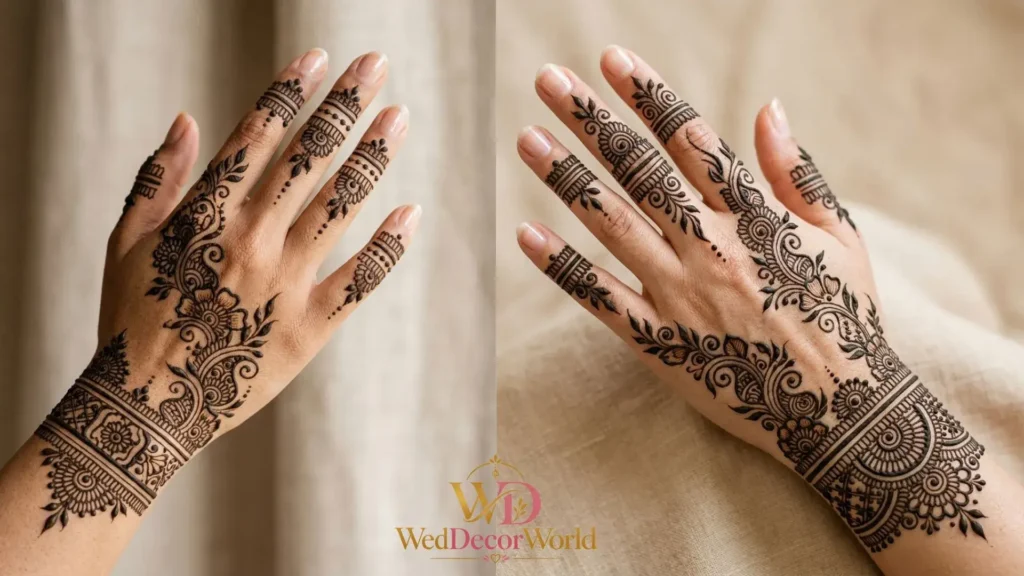
This style combines natural floral motifs with structured geometric shapes.
Flowers and leaves provide softness, while lines and geometric patterns provide definition.
The result can work well with contemporary bridal fashion.
- Asymmetrical Arabic Mehndi
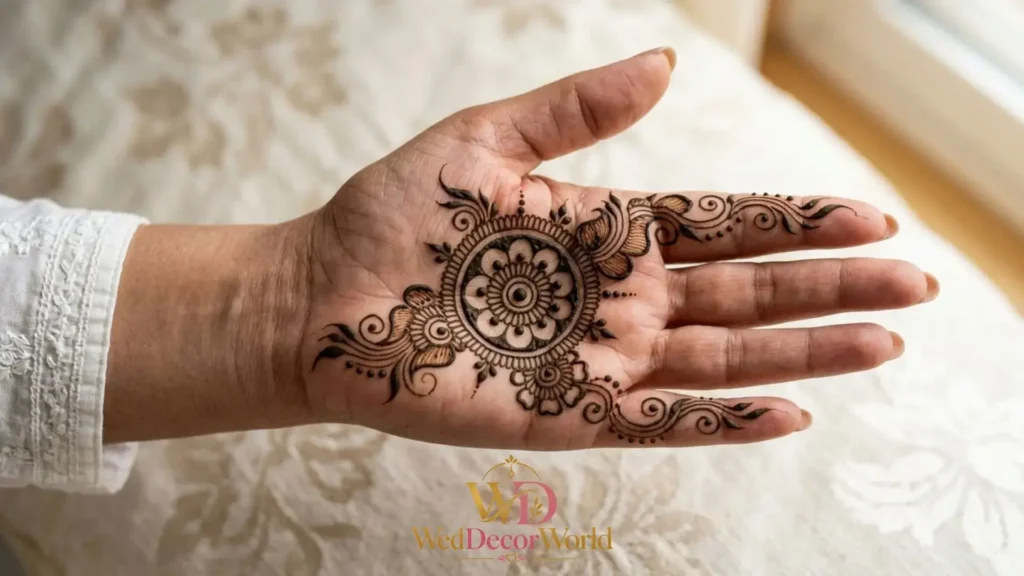
An asymmetrical design does not need to look identical on both hands.
One hand can feature a larger floral composition while the other uses a lighter complementary pattern.
This approach gives the overall bridal look a more artistic and personalized character.
Easy Arabic Mehndi Designs
- Easy Floral Vine
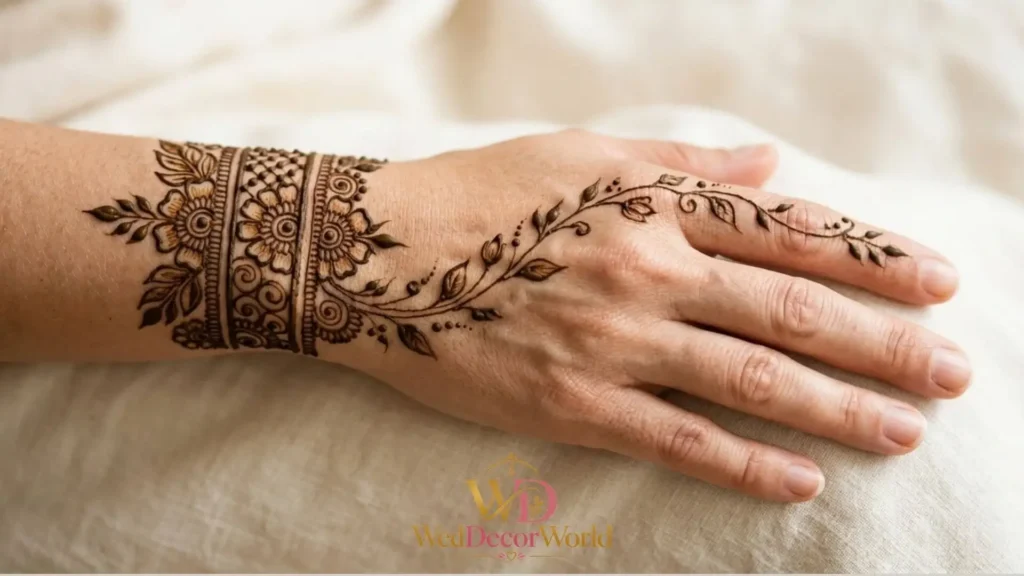
A beginner-friendly floral vine can be created using a few simple flowers, leaves, and curved lines.
The pattern does not need complicated shading to look attractive. Good spacing and clean lines can make a simple design appear polished.
- Easy Arabic Wrist Design
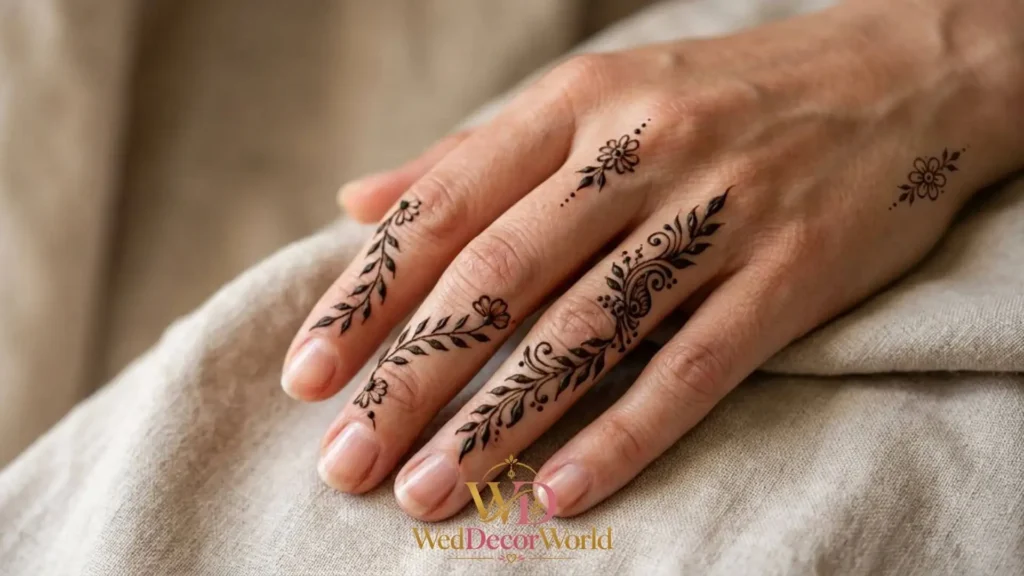
For a quick mehndi look, focus on the wrist.
Create a small decorative band and add a short vine extending toward the hand. A few dots or small flowers can complete the design.
- Easy Arabic Finger Design
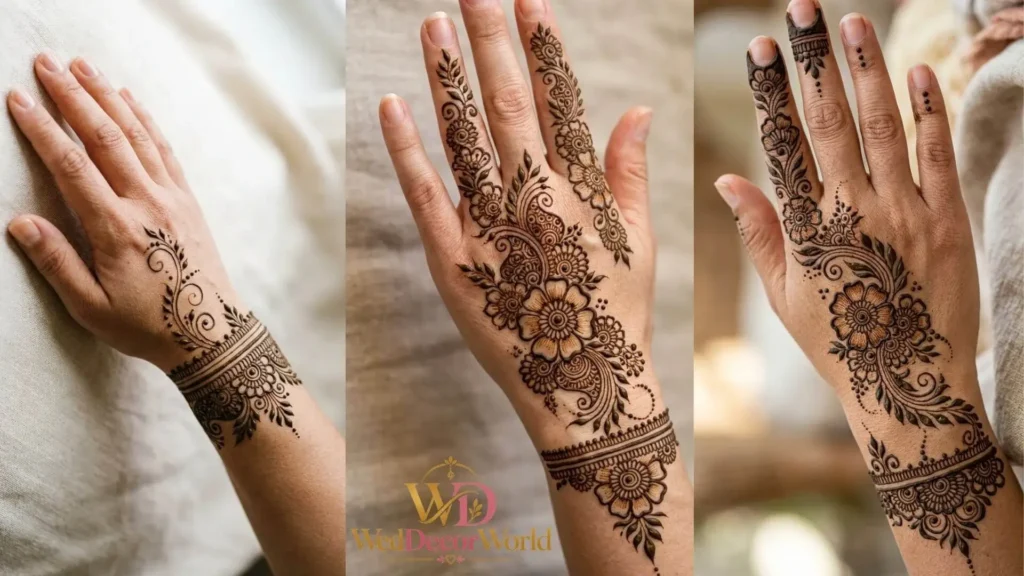
Finger mehndi can be surprisingly effective with only a few simple details.
Small flowers, leaves, dots, and curved lines can be arranged along one or two fingers while leaving the rest of the hand mostly open.
- Easy Arabic Floral Palm Design
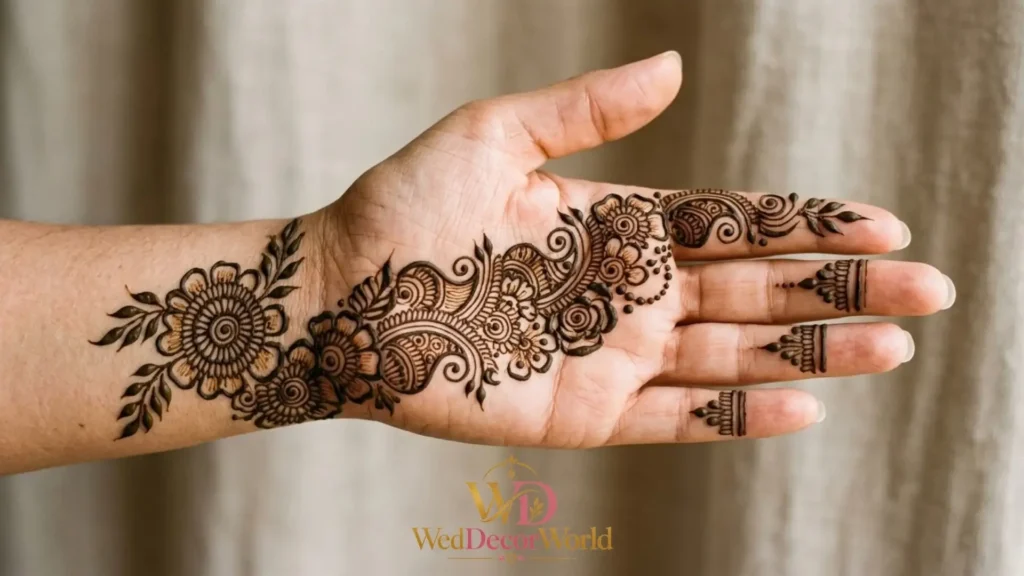
A single flower in the palm with two or three leaves can create a beautiful beginner-friendly pattern.
Add a small vine toward the wrist to give the design more length and movement.
- Simple Arabic Mehndi for Wedding Guests
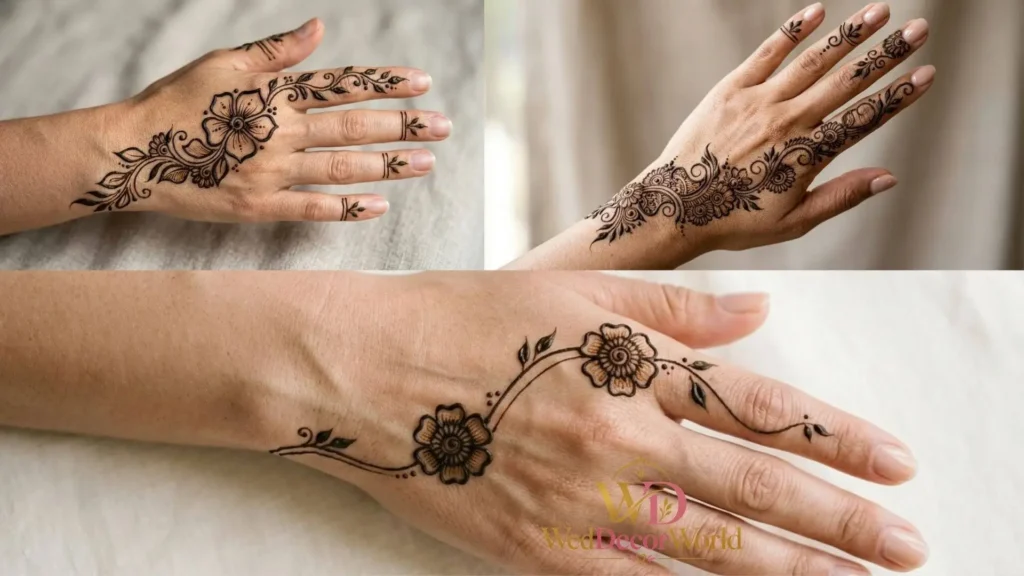
Wedding guests often prefer a design that is elegant but less elaborate than bridal mehndi.
A small floral pattern on the back or front of the hand, combined with a delicate wrist or finger detail, can create a polished look without requiring a large amount of henna.
How to Choose the Right Arabic Mehndi Design?
Choosing a design is easier when you consider the event, outfit, amount of coverage, and the overall look you want.
Consider the Wedding Event
A bride may choose a more detailed design for her main mehndi ceremony, while a wedding guest may prefer a smaller pattern.
For engagement parties or daytime events, minimal floral designs can work particularly well.
Match the Design with Your Outfit
Think about the embroidery, color, and overall style of your clothing.
If your outfit already contains heavy embroidery, an open Arabic mehndi design can provide visual balance. If your outfit is relatively simple, you can choose a more detailed pattern.
Decide How Much Coverage You Want?
Arabic mehndi gives you flexibility.
You can choose:
• Finger-only designs
• Wrist designs
• Half-hand designs
• Front-hand designs
• Back-hand designs
• Full-hand bridal designs
Choosing the coverage beforehand can help your mehndi artist create a more balanced composition.
Think About Your Jewellery
Your mehndi and jewellery should complement each other.
If you plan to wear large rings or bracelets, consider leaving some space around those areas so the jewellery and henna can both remain visible.