
Foot mehndi designs are a beautiful way to enhance your look for weddings, festivals, family gatherings, and special celebrations. From simple floral patterns to detailed bridal mehndi, there are many styles to choose from depending on your outfit, personal taste, and the occasion.
Whether you prefer minimal patterns or traditional Indian and Arabic designs, the right foot mehndi can add an elegant finishing touch to your overall appearance. In this guide, we will explore 35 beautiful foot mehndi ideas, along with helpful tips for choosing and maintaining your favorite design.
Why Choose Foot Mehndi Designs?
Foot mehndi is popular because it offers plenty of creative possibilities. Designs can cover the toes, ankles, sides of the feet, or the entire top of the foot. You can choose a delicate pattern for everyday celebrations or an intricate design for a wedding.
Some popular reasons to try foot mehndi include:
- Traditional beauty: Mehndi is an important part of many South Asian celebrations.
- Versatile styles: Designs range from simple flowers to elaborate bridal patterns.
- Personal expression: You can select motifs that match your personality and outfit.
- Temporary decoration: Natural henna creates a temporary stain without the need for permanent body art.
- Occasion-friendly options: There are suitable patterns for Eid, weddings, engagements, and festivals.
35 Beautiful Foot Mehndi Ideas to Try
- Simple Floral Foot Mehndi

Simple floral foot mehndi is perfect for anyone who loves a clean and delicate look. Small flowers connected with curved lines can be placed on the center of the foot, leaving plenty of natural skin visible. This design works well for casual celebrations and daytime events.
- Arabic Foot Mehndi Design

Arabic foot mehndi usually features flowing vines, bold flowers, and curved leaves. The pattern can travel diagonally from the toes toward the ankle, creating a graceful appearance. It is a lovely option for people who prefer artistic designs without covering every part of the foot.
- Bridal Foot Mehndi

Bridal foot mehndi often includes detailed flowers, paisleys, fine lines, and traditional decorative elements. The design may extend from the toes to the ankles for a coordinated bridal look. Brides can choose matching patterns on both feet or slightly different designs with a similar theme.
- Mandala Foot Mehndi
A mandala design features a circular pattern with repeated shapes arranged around a central point. On the foot, the mandala can be placed near the center or closer to the ankle. Its balanced appearance makes it suitable for traditional events and festive outfits.
- Minimalist Foot Mehndi
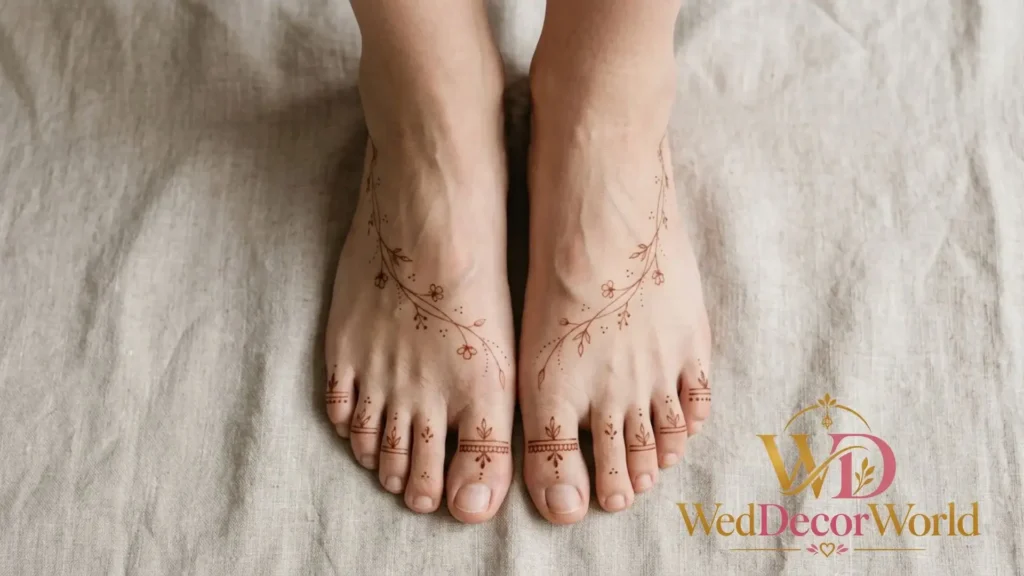
Minimalist foot mehndi is ideal for those who prefer subtle decoration. A few tiny flowers, dots, or curved lines can be arranged around the toes or along the side of the foot. This style is simple, elegant, and easy to coordinate with different outfits.
- Anklet-Style Foot Mehndi

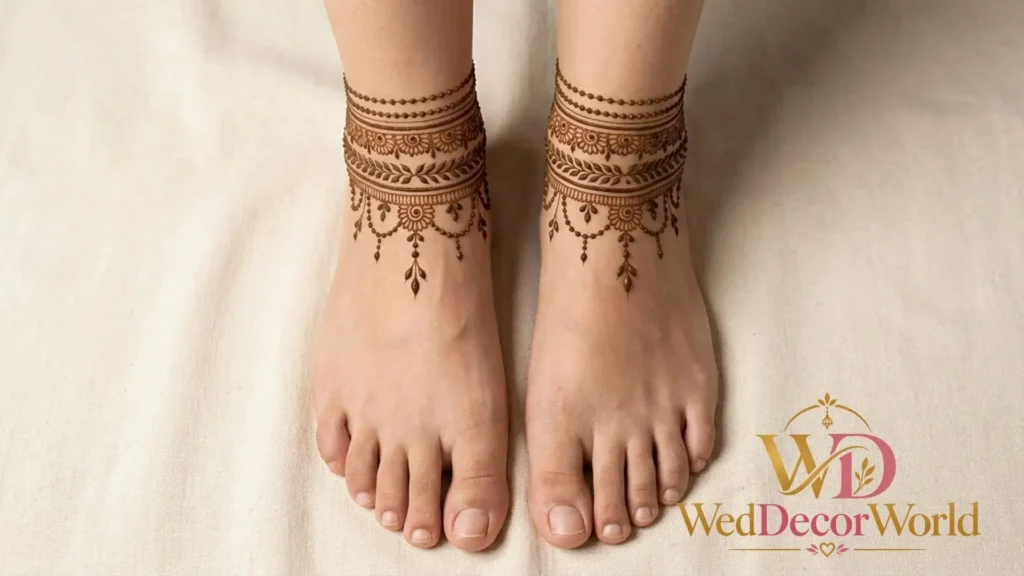
Anklet-style mehndi imitates the appearance of a decorative anklet using henna patterns. Small flowers, linked dots, and fine lines can form a band around the ankle, with a tiny hanging motif for extra detail. It is a beautiful alternative to a heavily filled design.
- Toe Mehndi Design
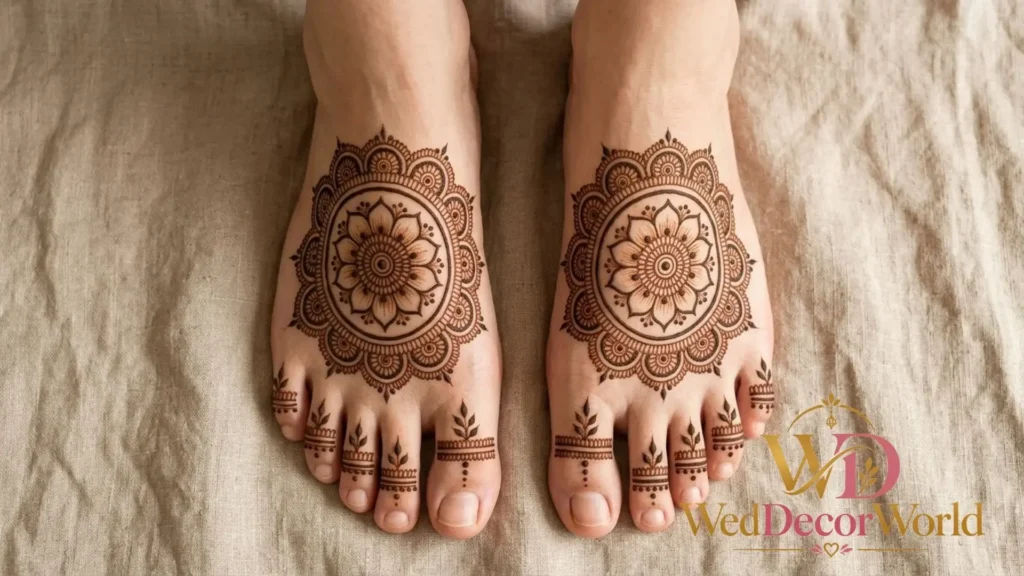
Toe mehndi focuses on decorating individual toes with small floral shapes, dots, leaves, and geometric patterns. You can keep the rest of the foot bare or add a small motif near the toes. This option is especially attractive with open-toe sandals.
- Paisley Foot Mehndi
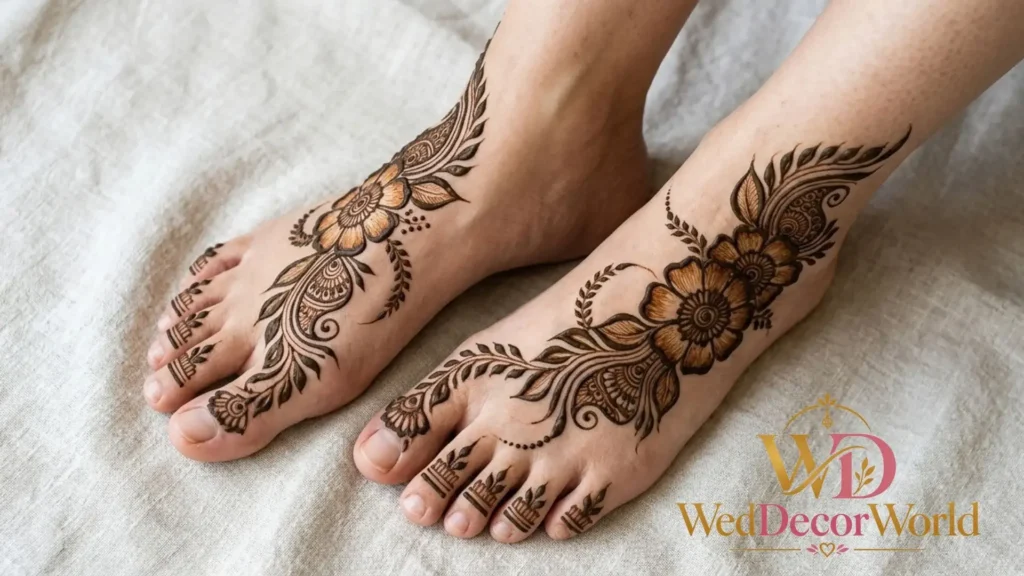
Paisley patterns are a classic feature of South Asian mehndi. A large paisley can be surrounded by leaves, curved lines, and smaller decorative shapes. The design looks attractive on the top of the foot and can be expanded for a more elaborate appearance.
- Mandala and Floral Combination
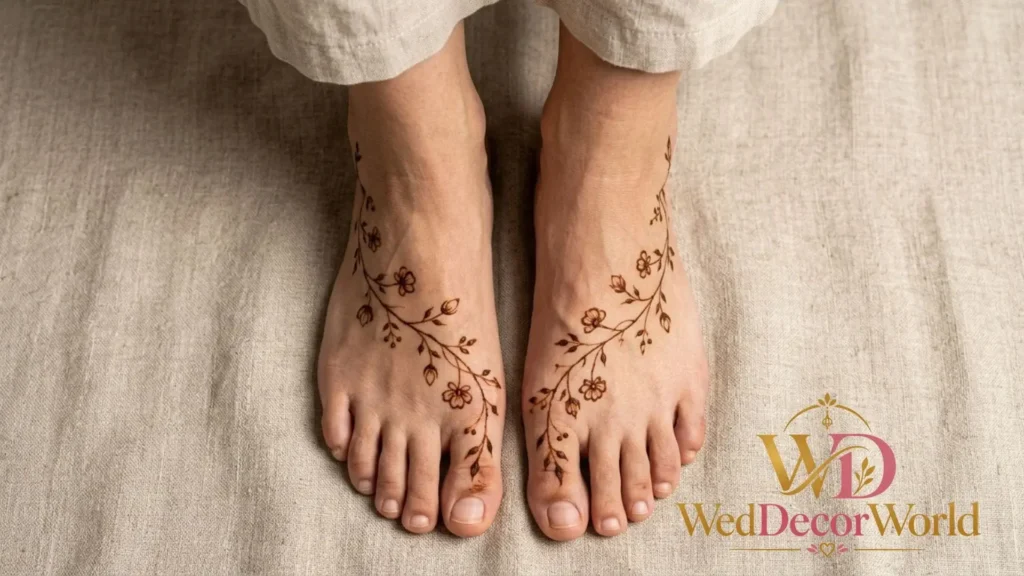
This design combines a central mandala with flowers and leafy vines extending toward the toes and ankle. The circular centerpiece adds structure, while the surrounding elements make the pattern feel soft and natural. It is a versatile choice for weddings and festive gatherings.
- Traditional Indian Foot Mehndi

Traditional Indian foot mehndi often includes paisleys, peacocks, flowers, fine lines, and repeated ornamental details. Some designs use closely arranged patterns to create a rich, decorative effect. This style is suitable for people who appreciate classic mehndi artistry.
- Moroccan-Inspired Foot Mehndi
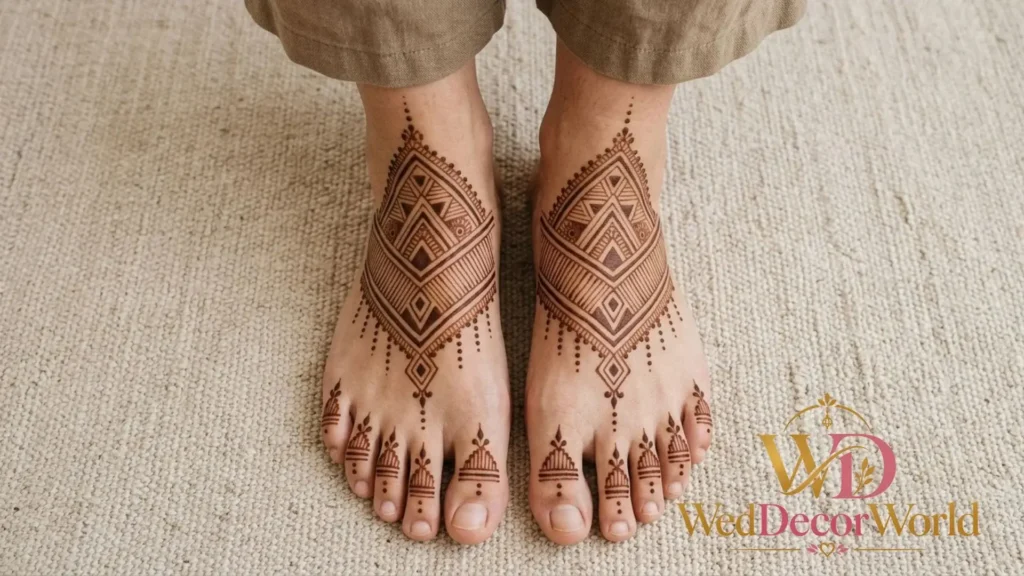
Moroccan-inspired designs use geometric shapes, diamonds, triangles, and symmetrical lines. The patterns often have a modern, structured appearance compared with floral designs. They are a good option for anyone looking for something distinctive and contemporary.
- Leafy Vine Foot Mehndi
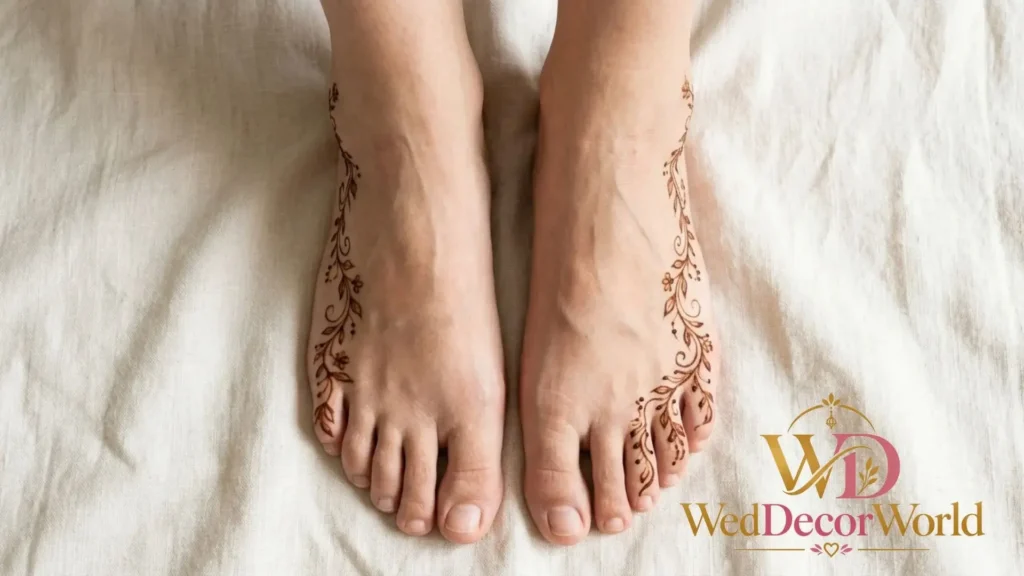
Leafy vine mehndi features curved stems decorated with small leaves and occasional flowers. The vine can start near the toes and extend toward the ankle or follow the outer edge of the foot. Its flowing shape creates a graceful look without requiring dense coverage.
- Peacock Foot Mehndi

Peacock-inspired mehndi features feather details, curved shapes, and decorative lines. A peacock motif can be placed on the top of the foot and surrounded by small flowers or paisleys. This design is particularly appealing for traditional weddings and cultural celebrations.
- Bracelet-Style Ankle Mehndi
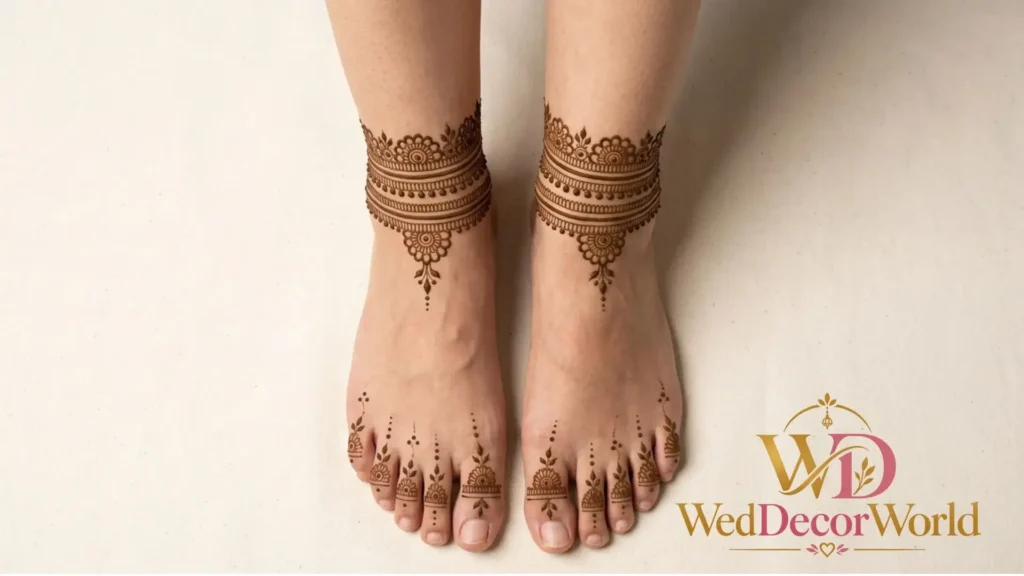
Bracelet-style ankle mehndi creates the appearance of an ornamental band around the ankle. Fine lines, tiny circles, and repeated floral elements can make the design look like traditional jewelry. Add a small central pendant motif for a more decorative finish.
- Full Foot Mehndi Design
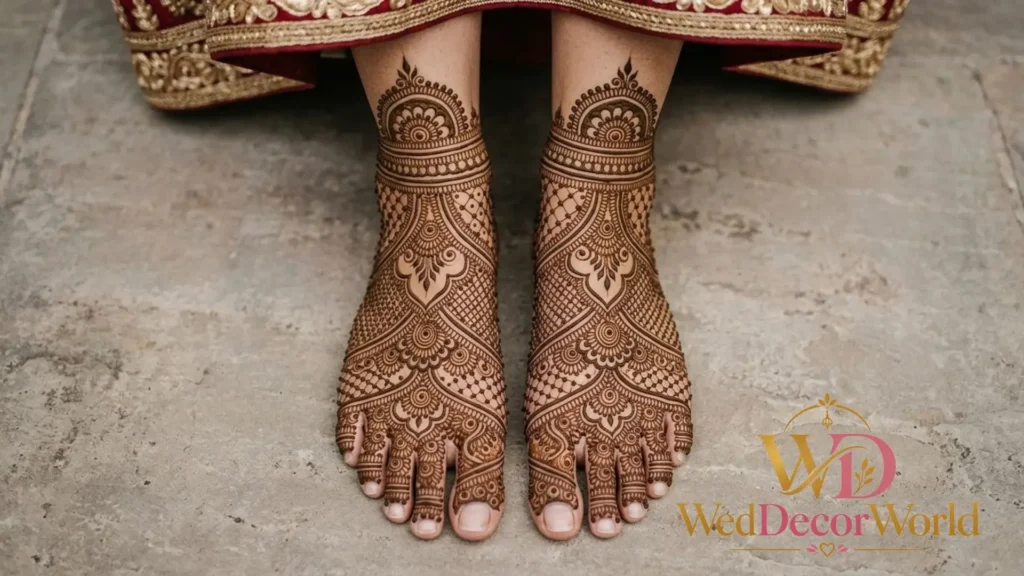
Full foot mehndi covers most of the top of the foot, including the toes and the area near the ankle. It may combine floral patterns, paisleys, mesh details, and geometric borders. This style is often chosen for bridal occasions and formal celebrations.
- Half Foot Mehndi Design
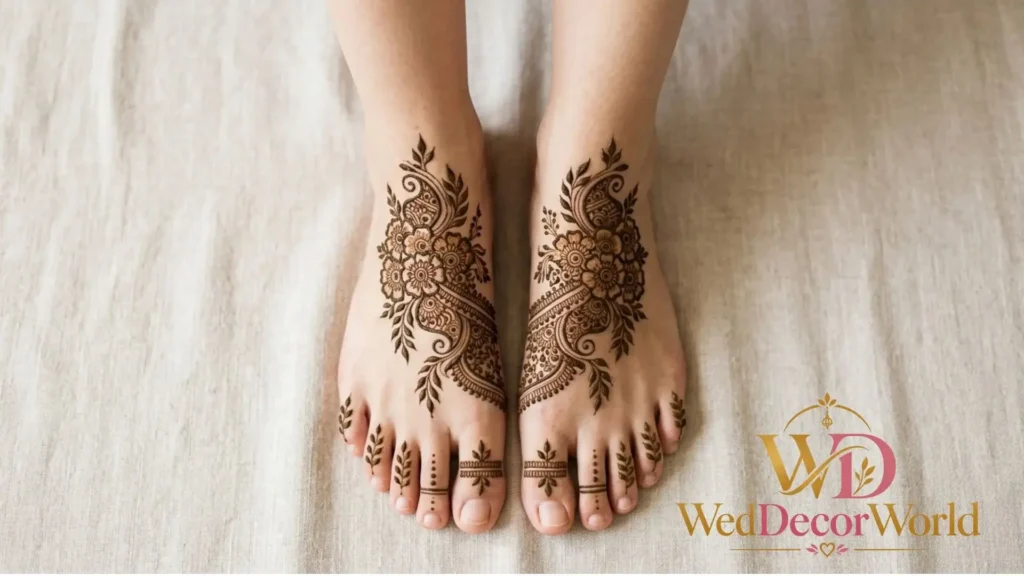
Half foot mehndi decorates only one section of the foot, such as the toes, outer edge, or center. The remaining skin is left uncovered to create contrast. It is an excellent option for those who want a detailed design without full coverage.
- Side Foot Mehndi Design
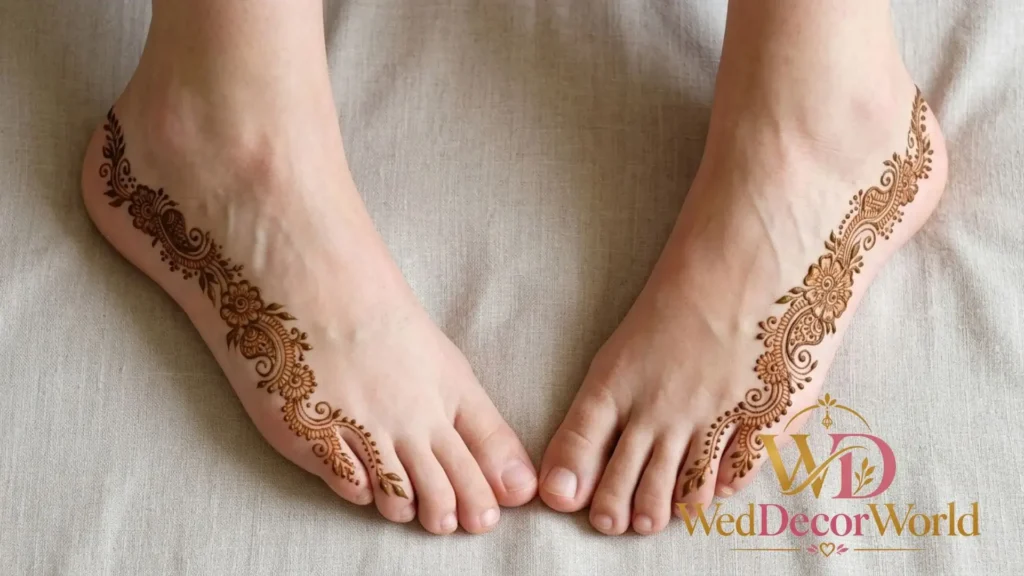
Side foot mehndi follows the outer or inner edge of the foot rather than covering the center. Flowers, vines, and small paisleys can be arranged in a flowing line. This placement creates an elegant look that pairs well with open footwear.
- Rose Foot Mehndi
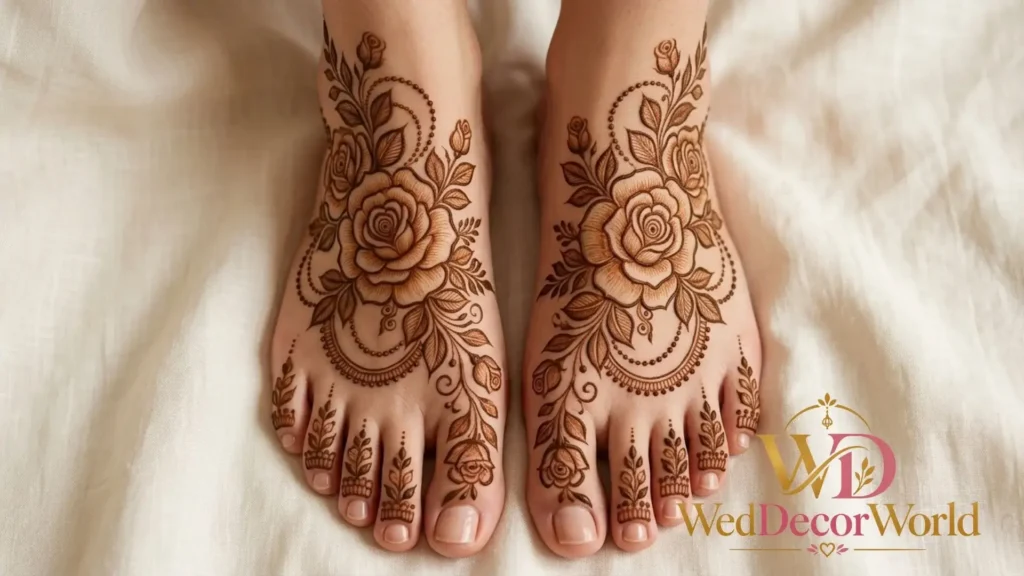
Rose-inspired mehndi features rounded floral shapes with layered petals and leafy details. A large rose can serve as the main motif, with smaller flowers arranged around it. This romantic design is a lovely choice for engagements, wedding functions, and festive occasions.
- Geometric Foot Mehndi

Geometric foot mehndi uses diamonds, triangles, parallel lines, and symmetrical shapes to create a contemporary pattern. It can be combined with small dots or flowers for additional detail. This style is suitable for anyone who enjoys neat, structured artwork.
- Lace-Style Foot Mehndi
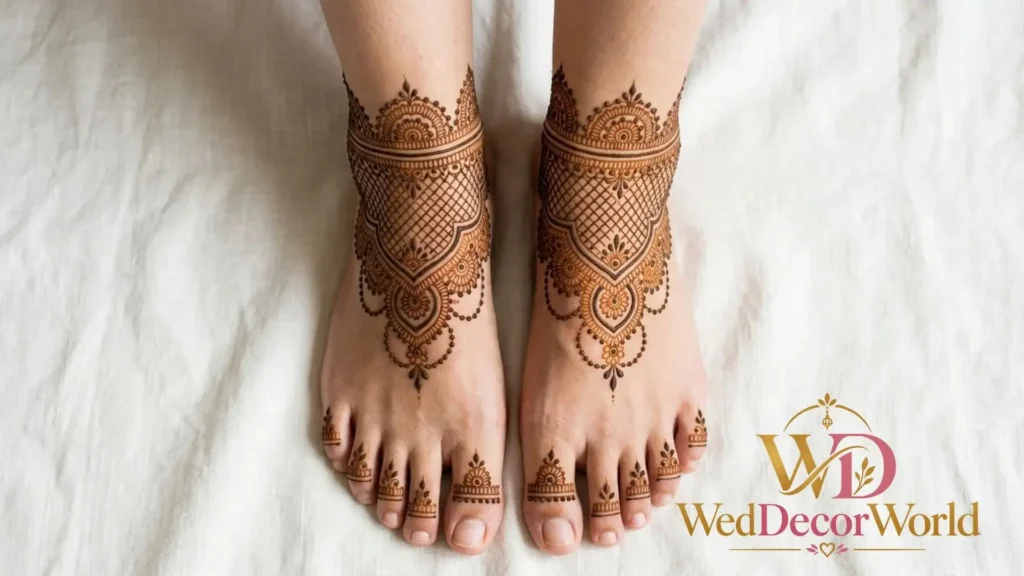
Lace-style mehndi resembles the delicate patterns found in decorative fabric. Fine lines, tiny loops, net-like sections, and scalloped borders create an intricate appearance. It works particularly well around the ankle and along the upper part of the foot.
- Dotted Foot Mehndi

Dotted foot mehndi uses small dots to connect flowers, leaves, and curved lines. The pattern can be kept minimal or developed into a more detailed design. Dots are also useful for filling small gaps and creating balance between larger motifs.
- Butterfly Foot Mehndi
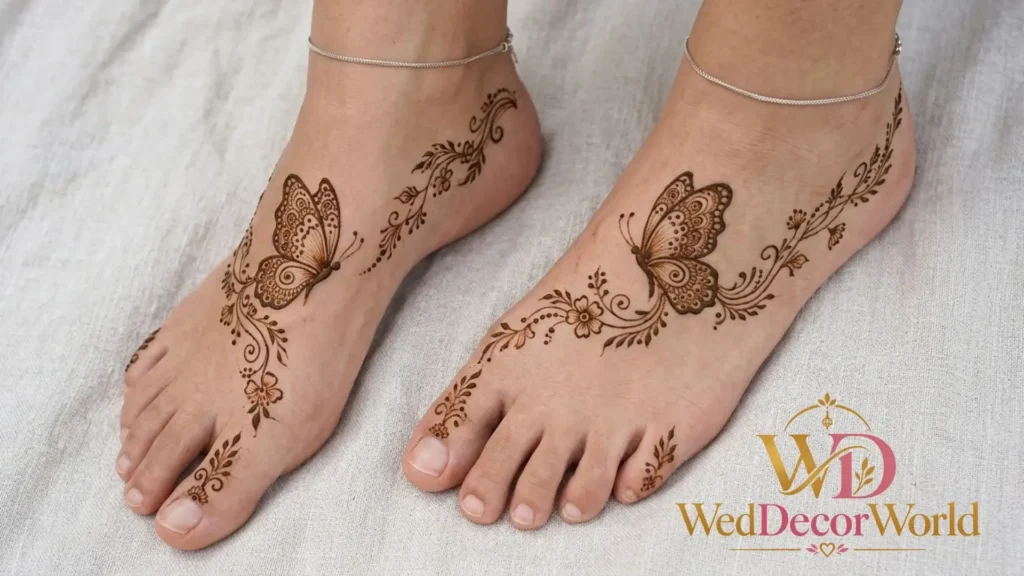
Butterfly-inspired foot mehndi adds a playful touch to a decorative pattern. A butterfly motif can be placed near the ankle or on the outer side of the foot, surrounded by tiny flowers and leaves. It is a charming option for people who enjoy nature-inspired designs.
- Heart-Shaped Foot Mehndi

Heart motifs can be incorporated into floral vines or placed near the toes for a sweet and personal design. A small heart surrounded by dots and leaves can look attractive without making the pattern too crowded. This style may suit engagements, anniversaries, and other celebrations.
- Modern Negative-Space Foot Mehndi
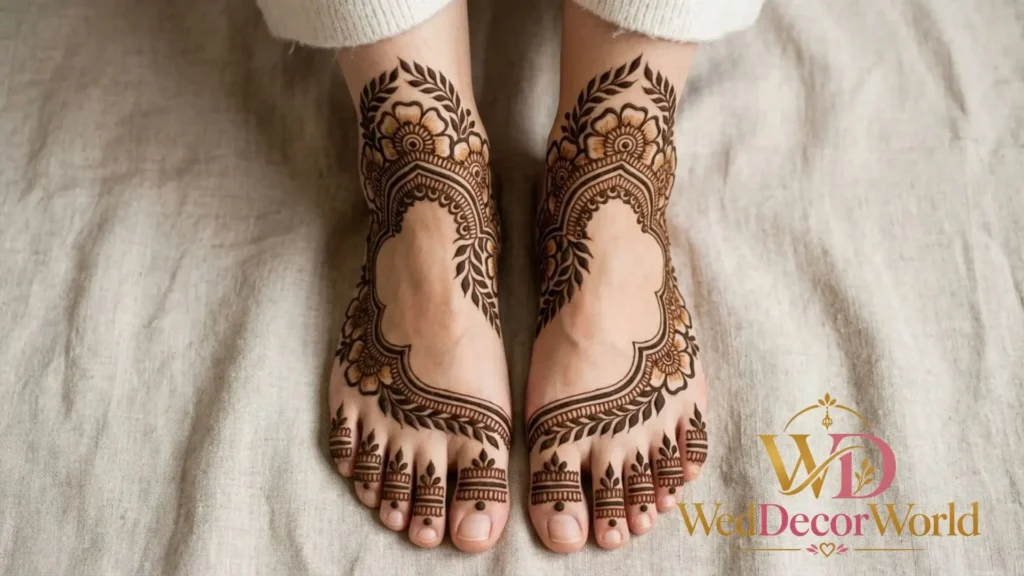
Negative-space mehndi uses uncovered areas of skin as part of the overall design. Bold flowers or curved borders are arranged around open sections to create contrast. This modern style is a good choice for people who want a fresh alternative to traditional full-coverage patterns.
- Symmetrical Foot Mehndi

Symmetrical foot mehndi uses similar patterns on the left and right feet. Matching mandalas, floral borders, or paisley arrangements can create a coordinated appearance. It is a popular option for bridal looks and occasions where balanced styling is preferred.
- Fusion Foot Mehndi
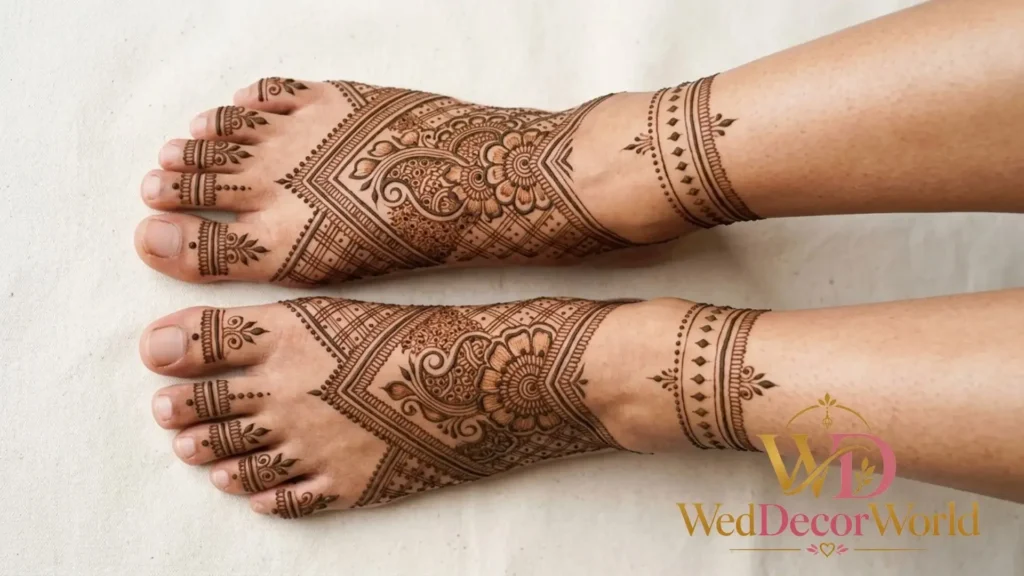
Fusion foot mehndi combines traditional floral motifs with modern geometric elements. For example, a mandala can be paired with straight lines, small diamonds, or minimalist ankle patterns. This approach offers flexibility for people who appreciate both classic and contemporary styles.
- Eid Foot Mehndi

Eid foot mehndi can feature simple flowers, leafy vines, crescents, or decorative geometric patterns. A light design is suitable for a relaxed family gathering, while a more detailed pattern can complement a festive outfit. Choose a layout that feels comfortable and matches your personal style.
- Engagement Foot Mehndi

Engagement foot mehndi often features delicate floral arrangements, paisleys, and ornamental ankle patterns. It can be less detailed than bridal mehndi while still looking special. Coordinating the design with your dress and jewelry can help create a polished overall appearance.
- Wedding Guest Foot Mehndi

Wedding guests may prefer elegant designs that are decorative but not as elaborate as bridal patterns. A floral vine, a small mandala, or an anklet-inspired arrangement can be a suitable choice. These styles add a festive touch without taking too much time to apply.
- Festival Foot Mehndi

Festival-inspired foot mehndi can include flowers, dots, leafy patterns, and traditional decorative shapes. Choose a simple design for a quick application or a larger pattern for a special celebration. Floral and geometric combinations are versatile choices for many festive occasions.
- Fine-Line Foot Mehndi
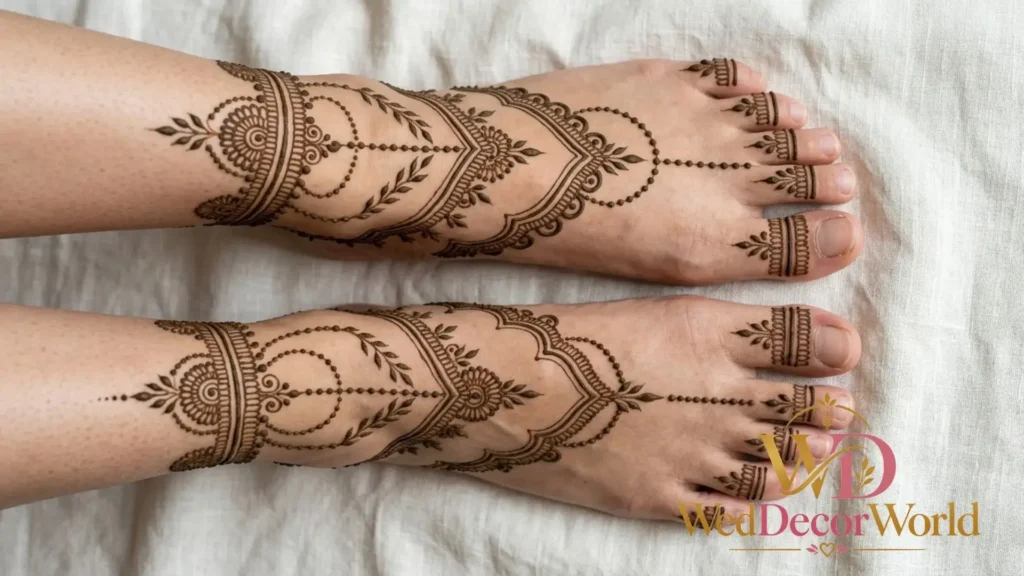
Fine-line foot mehndi emphasizes delicate strokes, tiny leaves, and intricate details. The design can follow the natural shape of the foot to create a subtle, refined look. This style works best when applied by someone comfortable with controlled, precise lines.
- Bold Floral Foot Mehndi
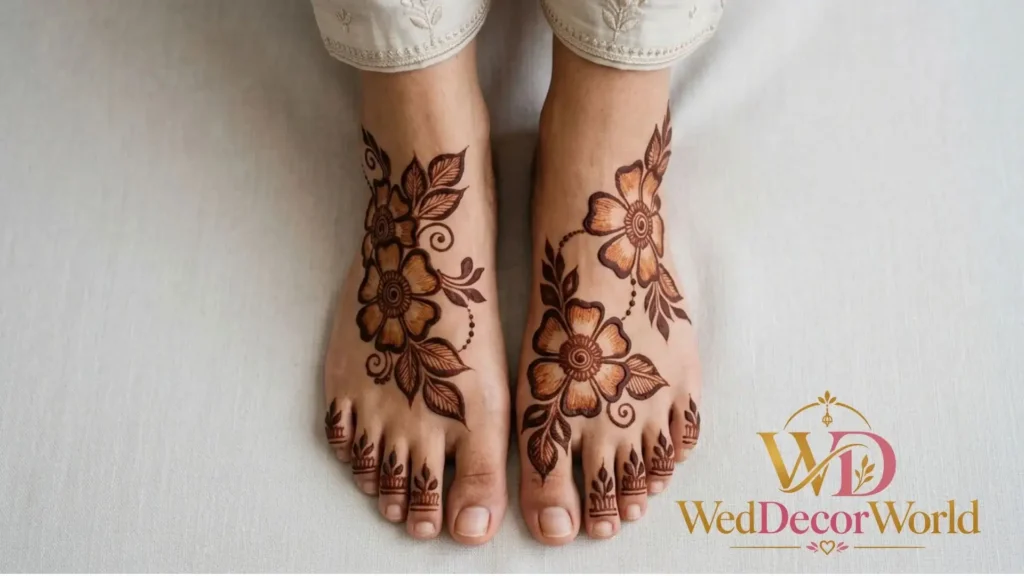
Bold floral mehndi uses larger flowers with clearly defined petals and leaves. The motifs can be spaced apart or linked with curved vines. This style is especially attractive for people who want their design to remain visually clear rather than filled with many tiny details.
- Mesh Pattern Foot Mehndi
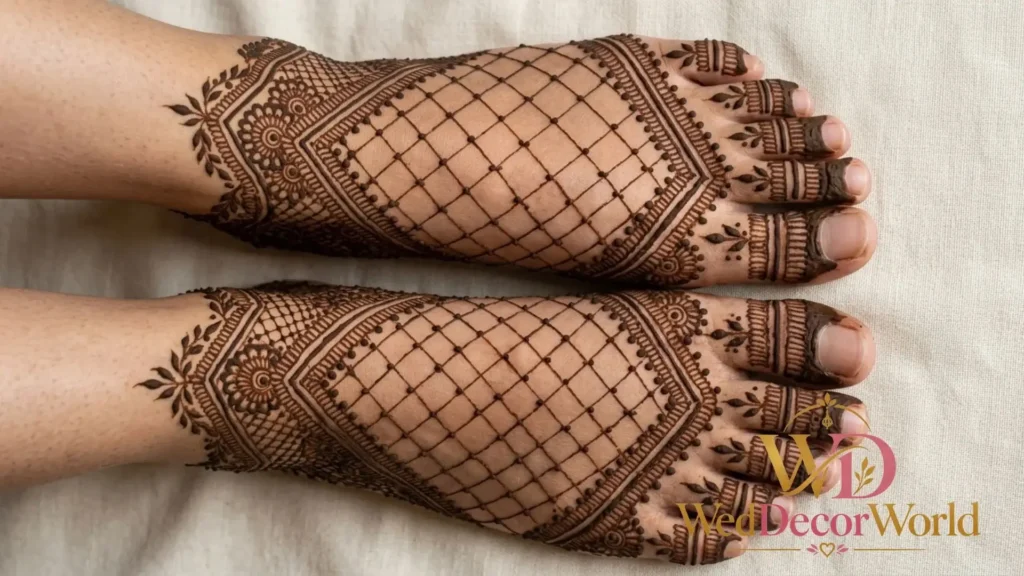
Mesh-pattern mehndi features a net-like arrangement of intersecting lines, often decorated with small dots or floral accents. It can fill a section of the foot or form a border around larger motifs. The result is a detailed look that pairs well with traditional designs.
- Bridal Trail Foot Mehndi
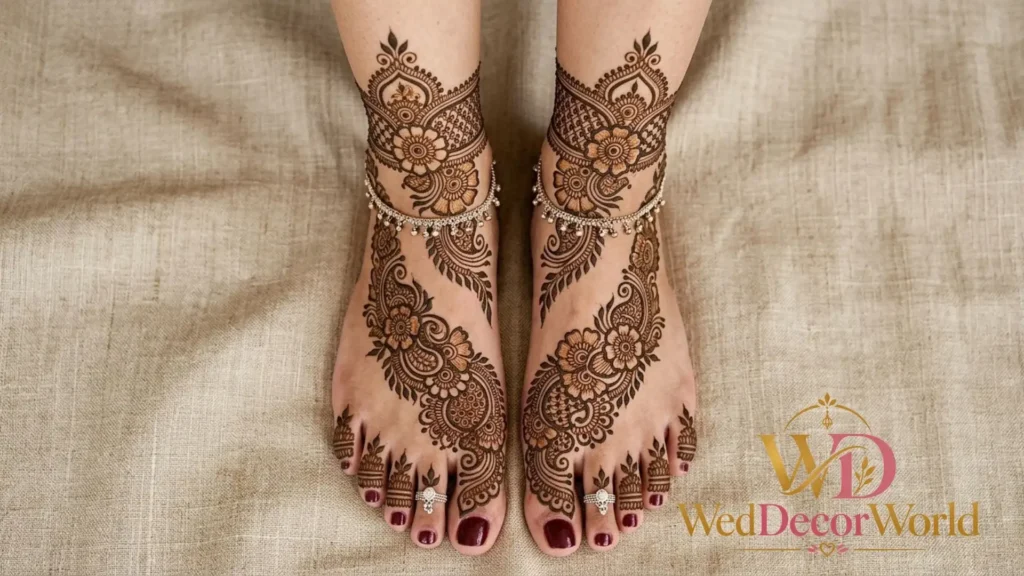
Bridal trail mehndi features a connected arrangement of flowers, paisleys, and leaves that moves from the toes toward the ankle. The continuous layout gives the design a flowing appearance. It is suitable for brides who want an elongated pattern rather than a single central motif.
- Simple Ankle and Toe Combination

This design combines a small ankle band with matching decoration on the toes. A few dots, leaves, and tiny flowers can connect the two sections while leaving the center of the foot mostly bare. It is an elegant option for those who prefer balanced, lightweight mehndi.
More Mehndi Design
- Beautiful and Stylish Back Hand Mehndi Designs Ideas
- Beautiful Front Hand Mehndi Designs Ideas
- Beautiful Full Hand Mehndi Designs Ideas
How to Choose the Best Foot Mehndi Design?
Selecting the right foot mehndi design depends on the occasion, your outfit, and how much detail you prefer.
Consider the occasion: Bridal events often suit intricate patterns, while family gatherings and casual celebrations may call for simpler designs.
Think about your footwear: If you plan to wear open sandals, you might prefer toe and ankle details. For closed footwear, choose a design that will not rub against shoes while the henna paste is developing.
Choose a comfortable coverage level: Full-foot designs are detailed and decorative, while half-foot and minimalist patterns are quicker to apply.
Match your personal style: Floral designs create a soft appearance, geometric patterns feel structured, and Arabic vines offer a flowing look.
Plan enough application time: Detailed bridal patterns may take considerably longer than small floral or ankle designs. Allow enough time for application and drying.
Tips for Getting a Beautiful Henna Stain
A few simple steps can help you care for your foot mehndi and avoid unnecessary irritation.
- Start with clean, dry skin before applying henna.
- Use henna products from a reputable source and follow the product instructions.
- Allow the paste to dry naturally for the recommended period.
- Avoid rubbing the design or exposing the paste to excessive moisture while it develops.
- After removing the paste according to the product directions, protect the area from unnecessary friction.
- Remember that the final color may develop gradually over the following day or two.
Natural henna typically leaves an orange-to-brown stain. The color and duration vary according to the product, skin, placement, and aftercare.
Avoid so-called black henna products that may contain para-phenylenediamine (PPD), a chemical associated with serious skin reactions. Do not apply henna to irritated or broken skin, and discontinue use if irritation occurs.
1 thought on “35 Beautiful Foot Mehndi Ideas for Every Occasion”