Mehndi is an important part of many weddings, festivals, and special celebrations. Among the different styles of mehndi, Front Hand Mehndi is especially popular because the front side of the hand provides a beautiful space for creative patterns and detailed designs.
Whether you prefer a simple design for a casual event or an intricate pattern for a wedding, there are many styles to choose from. Floral motifs, leaves, traditional paisleys, geometric patterns, mandalas, and delicate lines can all be combined to create an attractive look.
In this guide, we explore different Front Hand Mehndi ideas and share tips to help you choose a design that matches your occasion and personal style.
What Is Front Hand Mehndi?
Front Hand Mehndi refers to mehndi designs applied mainly to the palm and the front side of the hand. The design can cover the entire palm or focus on a smaller area depending on the desired look.
Some people prefer minimal patterns with plenty of open space, while others choose detailed designs that extend from the fingertips toward the wrist.
The best design depends on the occasion, outfit, personal preference, and the amount of time available for application.
- Simple Floral Front Hand Mehndi

Floral patterns are among the easiest ways to create an elegant mehndi design. A large flower can be placed in the center of the palm and surrounded by small leaves and curved lines.
This style is suitable for people who prefer a clean design without too many details. It can work well for family gatherings, festivals, and casual celebrations.
- Arabic Front Hand Mehndi

Arabic mehndi is known for flowing patterns, bold flowers, leaves, and attractive open spaces. Instead of covering the entire hand, the design often follows a diagonal or flowing arrangement.
This style is a great choice when you want a stylish look that does not feel too heavy.
- Mandala Front Hand Mehndi

A mandala design usually features a circular pattern placed in the center of the palm. Additional lines, petals, dots, and small shapes can be added around it.
Mandala mehndi can look elegant with both simple and detailed patterns. It is particularly suitable for people who enjoy symmetrical designs.
- Minimal Front Hand Mehndi

Minimal mehndi focuses on simplicity. Small flowers, leaves, dots, thin lines, and tiny geometric shapes can be used to create an attractive pattern.
This design is ideal for someone who wants a neat appearance without covering most of the hand.
- Floral Vine Mehndi

A floral vine design uses a flowing branch that travels across the palm or toward the wrist. Small flowers and leaves are added along the vine.
The natural movement of the pattern makes the hand look elegant while keeping the overall design relatively light.
- Paisley Front Hand Mehndi

Paisley, also known as a mango-shaped motif, is a traditional element in many mehndi designs. It can be used as the main centerpiece or combined with flowers and leaves.
A single detailed paisley can create a beautiful design without requiring full-hand coverage.
- Finger Mehndi Design
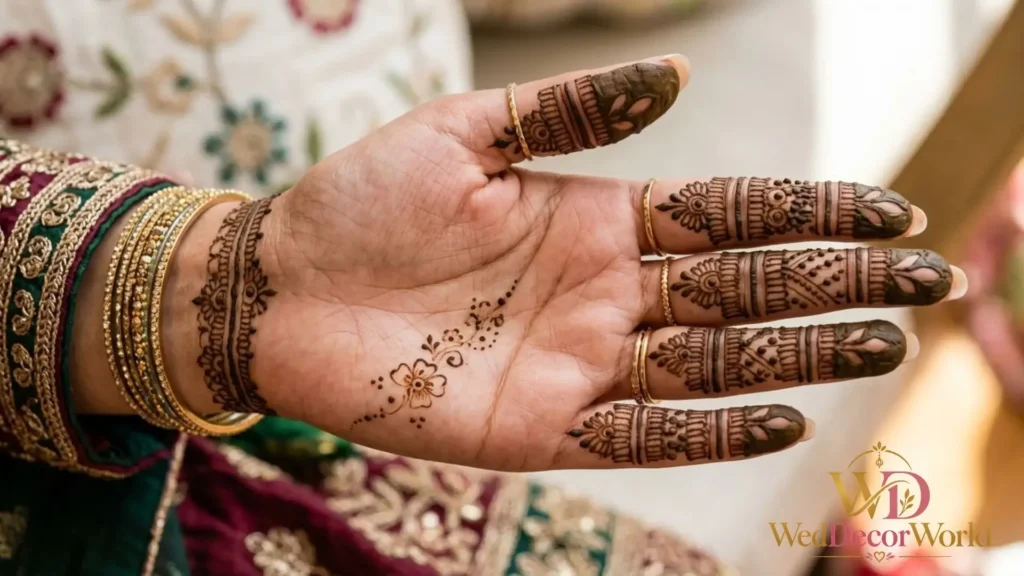
For a modern and delicate appearance, the design can focus mainly on the fingers. Small floral patterns, rings, dots, lines, and leafy details can be arranged across the fingers.
Finger-focused mehndi is a good option when you want the palm to remain mostly open.
- Full Palm Front Hand Mehndi
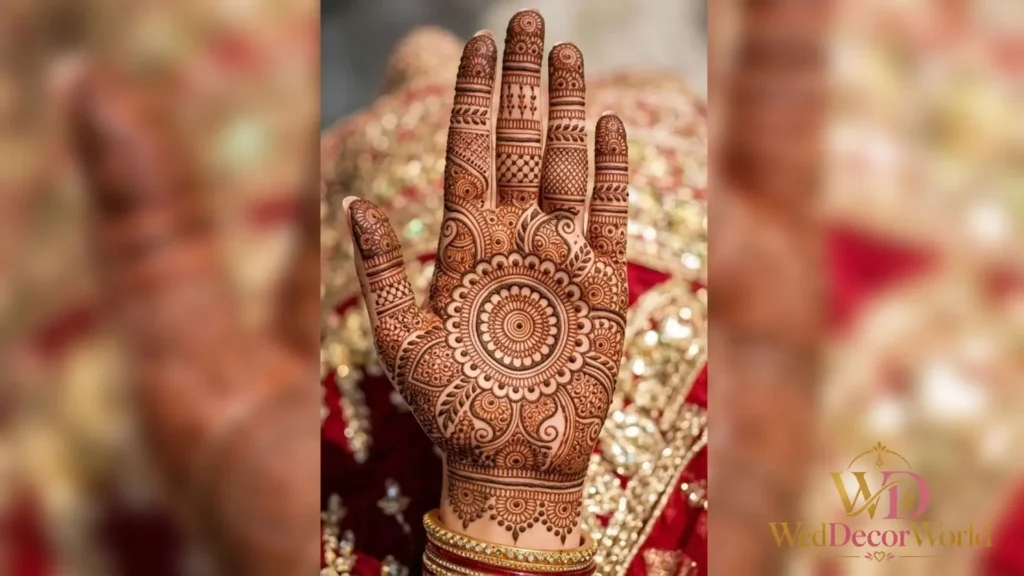
A full-palm design covers most of the palm with detailed patterns. Floral motifs, paisleys, leaves, dots, and fine lines can be combined to create a rich appearance.
This style is especially popular for weddings and traditional celebrations where a more detailed mehndi look is preferred.
- Geometric Front Hand Mehndi
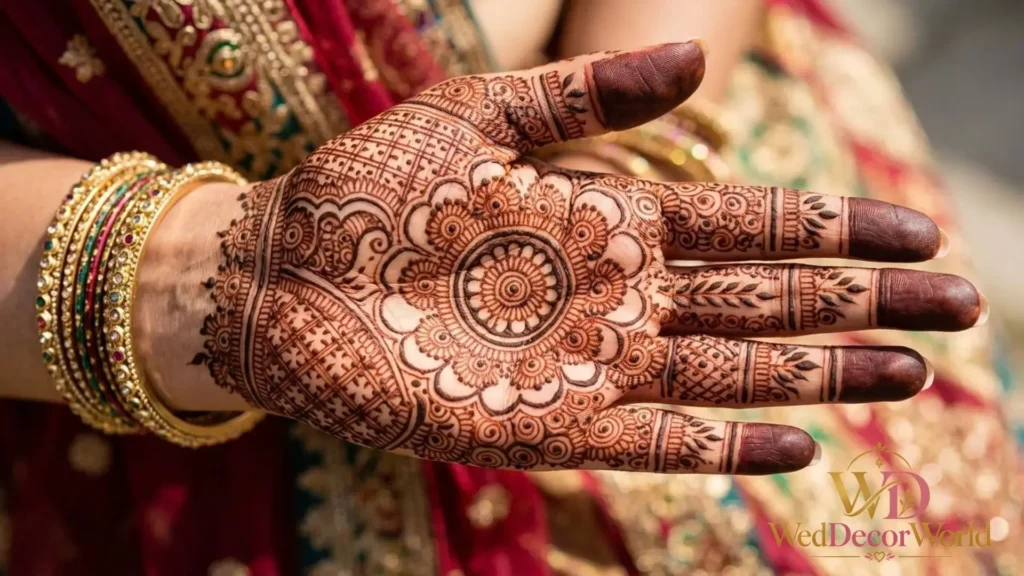
Geometric mehndi uses shapes such as diamonds, triangles, circles, grids, and straight lines. These elements can be combined with floral motifs for a contemporary appearance.
It is a good choice for people who prefer structured and symmetrical designs.
- Rose Mehndi Design

Roses can create a soft and elegant appearance on the hand. A large rose can be placed in the center of the palm with leaves and smaller flowers surrounding it.
Rose designs can be kept simple or developed into a detailed pattern depending on the occasion.
- Lotus Front Hand Mehndi

The lotus is another attractive floral motif for mehndi. It can be placed in the center of the palm or incorporated into a larger pattern.
Combining lotus petals with leaves, dots, and curved lines can create a balanced and graceful design.
- Bridal Front Hand Mehndi

Bridal mehndi is generally more detailed than everyday designs. It may include flowers, paisleys, traditional motifs, fine lines, and elaborate patterns extending toward the wrist and fingers.
Brides can choose a design that matches the overall style of their wedding and other mehndi details.
- Bracelet Style Mehndi

Bracelet-style mehndi creates a decorative band around the wrist while extending some elements toward the palm.
This design gives the appearance of wearing a delicate bracelet made from mehndi. Floral vines, geometric patterns, and small decorative details work well with this style.
- Jewelry-Inspired Mehndi

Jewelry-inspired mehndi imitates the appearance of bracelets, rings, chains, and other accessories. The design can connect the fingers with decorative lines while creating a bracelet-like pattern around the wrist.
It is a stylish option for people who enjoy creative and modern mehndi designs.
- Leafy Front Hand Mehndi

Leaf patterns can create a simple and natural appearance. A combination of large and small leaves can be arranged along a curved vine across the palm.
This style works especially well when paired with small flowers and delicate dots.
- Round Motif Mehndi

A round central motif can act as the main focus of the palm. It can contain petals, geometric shapes, dots, and fine lines.
The remaining space can be decorated with small leaves and patterns without making the design look crowded.
- Half Hand Mehndi
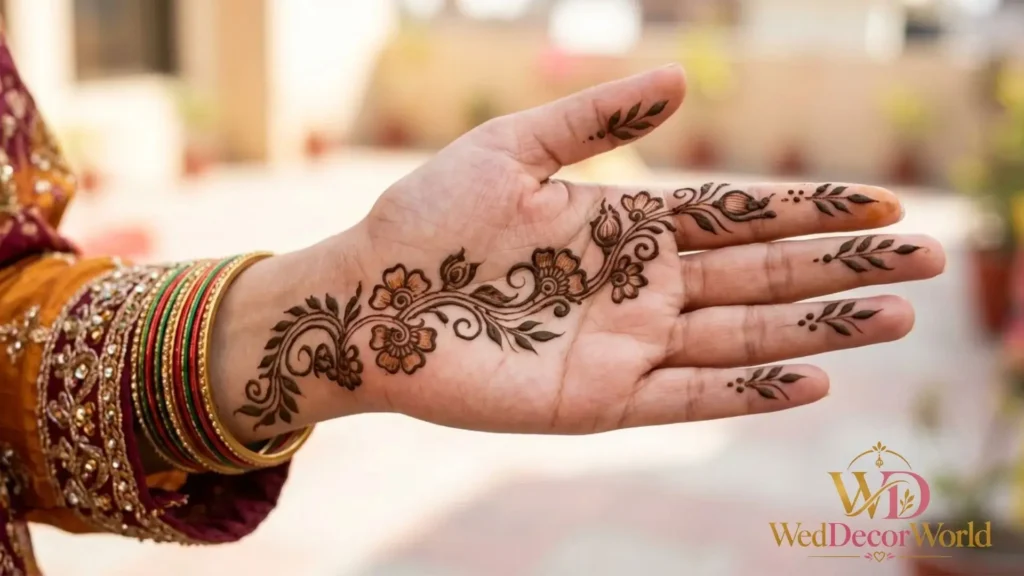
Half-hand designs cover only part of the palm while leaving some areas open. The pattern can begin near the wrist and move toward the center or fingers.
This is a practical choice for people who want something more detailed than a minimal design but less elaborate than full-hand mehndi.
- Contemporary Front Hand Mehndi

Contemporary designs combine traditional motifs with modern layouts. They may use unusual spacing, clean lines, geometric patterns, and simplified floral elements.
This style is suitable for people who want a fresh look while still enjoying traditional mehndi art.
- Traditional Indian Mehndi

Traditional Indian mehndi often features detailed floral patterns, paisleys, peacocks, leaves, and intricate lines.
A traditional design can be adapted to cover the palm, fingers, and wrist depending on how elaborate you want the final look to be.
- Dotted Front Hand Mehndi
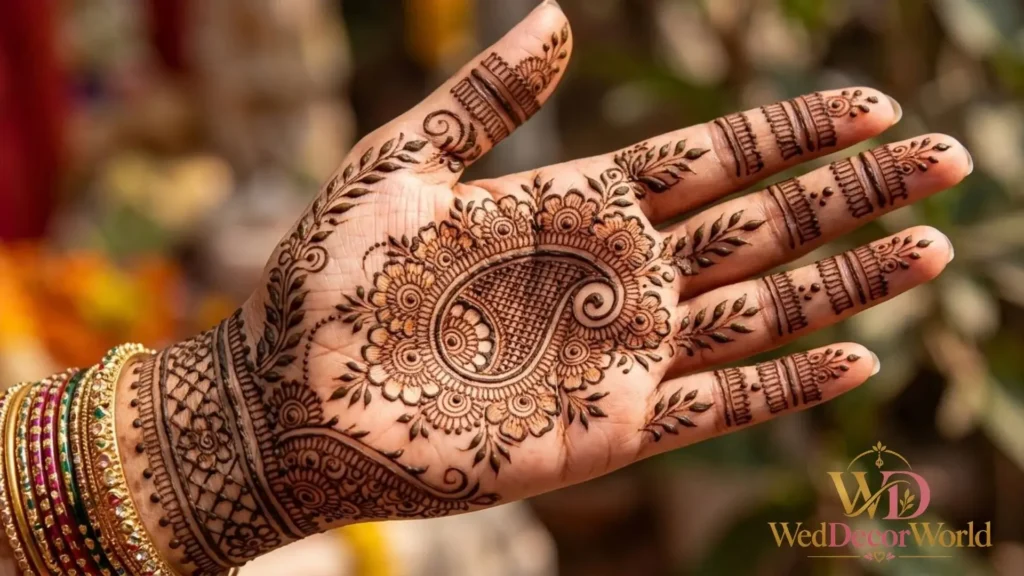
Dots are simple but useful decorative elements in mehndi. They can be used around flowers, along borders, between geometric shapes, or at the fingertips.
A dotted design can add detail without making the overall pattern too heavy.
- Peacock Mehndi Design
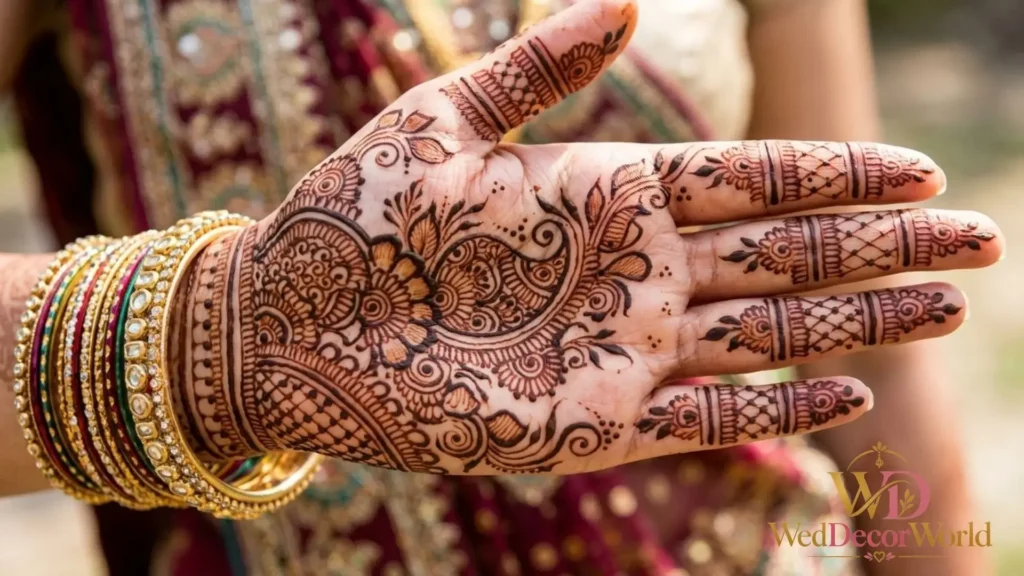
Peacock motifs are a classic choice for traditional mehndi. A peacock can be placed in the center of the palm and surrounded by flowers, leaves, and decorative patterns.
This design can be particularly attractive for weddings and cultural celebrations.
- Front Hand Mehndi With Negative Space
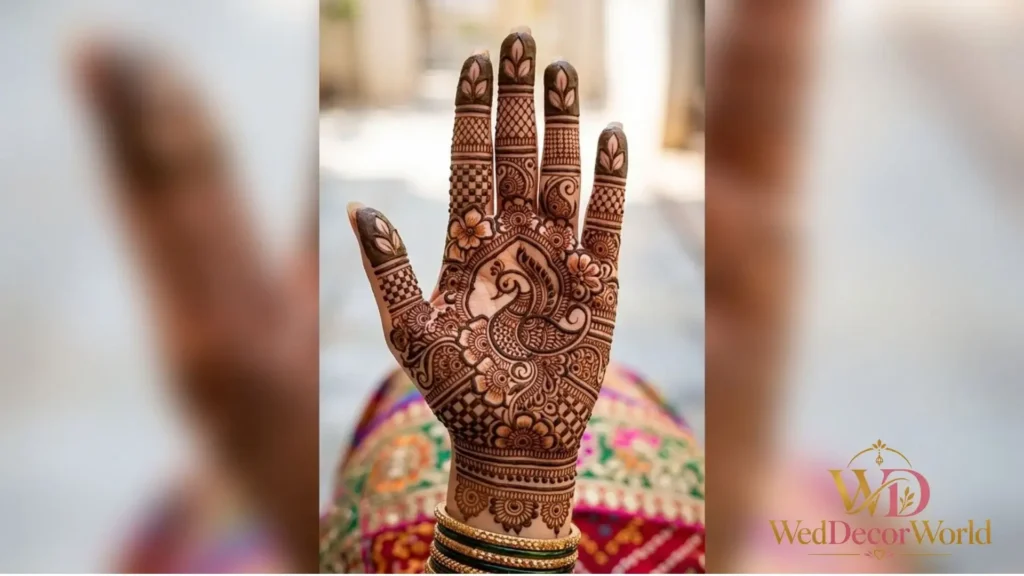
Negative-space mehndi deliberately leaves sections of the hand uncovered. The contrast between the decorated and open areas makes the design stand out.
This technique works especially well with floral, geometric, and Arabic-style patterns.
- Mandala and Floral Combination
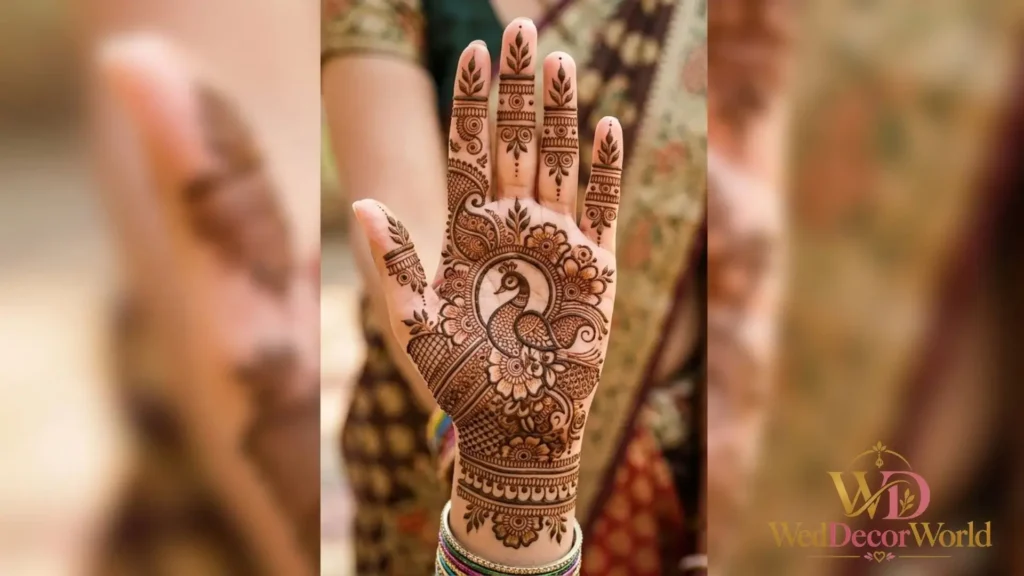
A mandala can be used as the central element while flowers and leaves extend toward the fingers and wrist.
This combination provides symmetry in the center while adding a natural flowing appearance around it.
- Delicate Line Mehndi
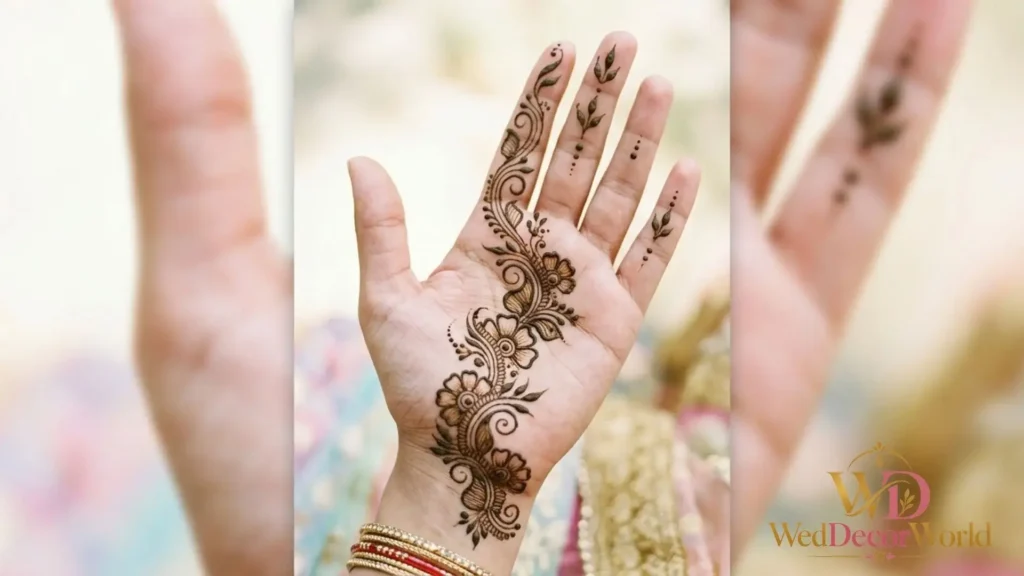
Delicate-line designs use thin strokes to create small flowers, leaves, curves, and geometric patterns.
They are ideal for people who prefer an elegant and lightweight appearance. A skilled mehndi artist can create impressive detail using very fine lines.
- Front Hand Mehndi With Finger Details
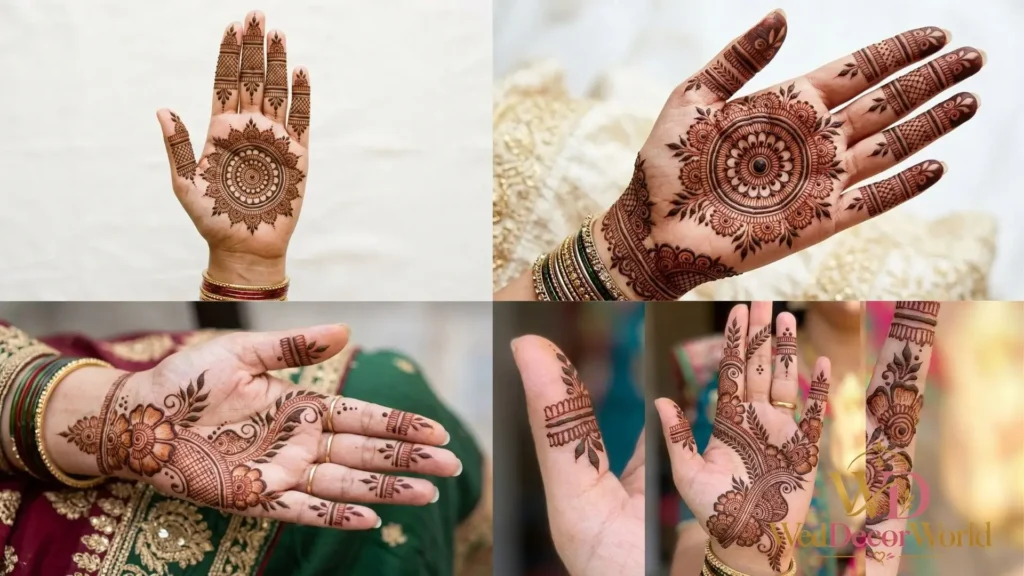
Instead of covering the entire palm, you can create a central palm motif and decorate each finger with a different small pattern.
This approach creates variety while keeping the overall design organized.
How to Choose the Right Front Hand Mehndi Design?
Choosing a mehndi design becomes easier when you consider the occasion and your personal preferences.
For a casual event, a minimal floral or leafy design may be enough. For a wedding, you may prefer a more detailed bridal pattern. If you like modern styles, geometric or negative-space designs can be a good choice.
You should also consider how much time you have available. Detailed designs require more application time, while simple patterns can be completed more quickly.
Tips for a Beautiful Mehndi Design
Before applying mehndi, make sure your hands are clean and free from heavy creams or oils. This can help the paste sit properly on the skin.
Choose a design that matches the size and shape of your hand rather than simply copying a pattern without considering its placement. A balanced design usually looks better when the elements flow naturally from the palm toward the fingers and wrist.
After application, follow the mehndi artist’s care instructions and allow the paste to dry properly.